


Key Takeaways
- Rapid prototyping costs typically range from $500 to $50,000+, depending on fidelity, complexity, team structure, and project scope.
- Prototype costs are primarily influenced by screen count, interaction depth, iteration rounds, delivery model, and location.
- A prototype is significantly cheaper than an MVP and helps validate ideas before committing to full development budgets.
- AI-assisted prototyping can reduce design timelines by 30–50% while lowering early-stage validation and discovery costs.
- Investing in rapid prototyping helps prevent expensive development rework, improving ROI and reducing overall product risk.
Rapid prototyping cost in 2026 typically ranges from $500 to $50,000+, depending on prototype fidelity, product complexity, team structure, and delivery timeline. For most startups and digital product teams, a realistic budget falls between $2,000 and $25,000 for a validated, interactive prototype before moving into development.
Before investing $50,000 to $200,000+ in software development, understanding the cost of building a product prototype is one of the most important financial decisions a founder can make. A prototype helps validate assumptions, test user experience, secure stakeholder buy-in, and reduce development risks long before code is written. For a deeper understanding of the process, explore our guide on rapid prototyping in product development.
Most search results discussing rapid prototyping cost focus on manufacturing, 3D printing, or industrial engineering. This guide takes a different approach. It is specifically designed for startup founders, CTOs, product managers, and business leaders evaluating rapid prototyping services, app prototype development cost, software prototyping cost, and digital product validation strategies in 2026.
Many businesses partner with experienced rapid prototyping services providers to accelerate validation and reduce product development risk before investing in full-scale engineering. In this guide, we’ll break down rapid prototyping pricing, key cost drivers, prototype development cost estimates, prototype vs. MVP costs, and practical ways to maximize ROI.
Table of Contents
Factors That Determine Your Rapid Prototyping Cost
No two prototypes cost exactly the same. Throughout the rapid prototyping process, several variables influence where your project falls on the rapid prototyping pricing spectrum. Understanding these factors helps founders and product teams identify which cost drivers they can control while making smarter budgeting decisions.
Fidelity Level: Lo-Fi, Mid-Fi, or Hi-Fi
Fidelity is often the biggest factor affecting product prototype cost.
Low-fidelity prototypes focus on structure, workflows, and user journeys. These typically include sketches, wireframes, and simple clickable flows. A low-fidelity prototype cost usually falls between $500 and $8,000, making it ideal for early-stage concept validation.
Mid-fidelity prototypes add interaction layers and realistic navigation. They are commonly used for stakeholder alignment and usability testing. These are frequently used alongside UX research consulting initiatives to gather user feedback and improve decision-making before development begins
High-fidelity prototypes closely resemble the final product. They include branding, polished UI, advanced interactions, and detailed user experiences. High-fidelity prototype design cost can range from $20,000 to $50,000+ depending on complexity.
A simple rule applies: use low-fidelity prototypes to validate ideas and high-fidelity prototypes when pitching investors or preparing development handoffs.
Complexity and Scope: Screen Count and Interaction Depth
The number of screens directly influences software prototyping cost.
A startup app with eight screens requires significantly less effort than a SaaS platform featuring dashboards, analytics, permissions, notifications, and multiple user roles.
Interaction depth also matters. Static click-through prototypes cost less than advanced prototypes with animations, conditional states, and dynamic workflows.
The most cost-effective approach is focusing only on the flows needed to validate your core business assumption.
Who Builds It: In-House, Freelancer, Agency, or AI Tools
The delivery model dramatically affects rapid prototyping services cost.
- In-house designers provide the lowest incremental expense if resources already exist.
- Freelancers typically charge $50–$150 per hour in North America.
- Offshore freelancers often charge $20–$60 per hour.
- Product and design agencies generally charge $100–$250 per hour.
- AI-assisted tools increasingly reduce first-draft creation costs.
Modern tools such as Figma AI, Uizard, and Galileo AI can reduce design effort by approximately 30–50%. For simple validation projects, AI-assisted prototype development cost estimates often fall between $1,500 and $5,000.
AI-assisted prototyping is becoming mainstream. According to McKinsey’s State of AI 2025 survey, 78% of organizations now use AI in at least one business function, creating significant opportunities to accelerate product design workflows.
If investor presentations, enterprise clients, or development handoffs are involved, agency support often delivers stronger long-term value.
Number of Iterations
Every iteration adds cost.
Most digital products require two to four revision cycles based on stakeholder reviews and user feedback. New screens, revised flows, and design refinements increase project hours.
A practical budgeting framework is to allocate approximately 30% beyond your initial estimate to accommodate necessary changes.
Tooling and Platform
The design tools used during prototyping influence efficiency, collaboration, and development handoff quality. Some of the best prototyping tools for startups and product teams include:
- Figma
- Framer
- ProtoPie
- Webflow
- Bubble
- Uizard
- Galileo AI
Tool subscription fees are generally minor compared to labor costs. The real expense appears when teams choose platforms that complicate development handoffs and create unnecessary redesign work.
Geographic Location of the Team
Location remains one of the most significant pricing variables in rapid prototyping cost 2026 calculations.
Here is a region-wise table for your convenience:
| Region | Typical Hourly Rate | Typical Hi-Fi Prototype Cost |
| US / UK / Australia | $100–$250/hr | $15,000–$50,000+ |
| Eastern Europe | $40–$90/hr | $8,000–$25,000 |
| Latin America | $40–$90/hr | $8,000–$25,000 |
| India / Southeast Asia | $20–$50/hr | $3,000–$12,000 |
For many startups, selecting the right offshore partner creates the strongest balance between quality, speed, and cost efficiency. Companies that offer both rapid prototyping expertise and end-to-end product development services can often deliver better continuity, faster execution, and lower overall project costs.
Rapid Prototyping Cost by Product Type
The type of digital product you’re building directly impacts app prototype development cost and overall prototype development timelines.
Mobile App Prototype
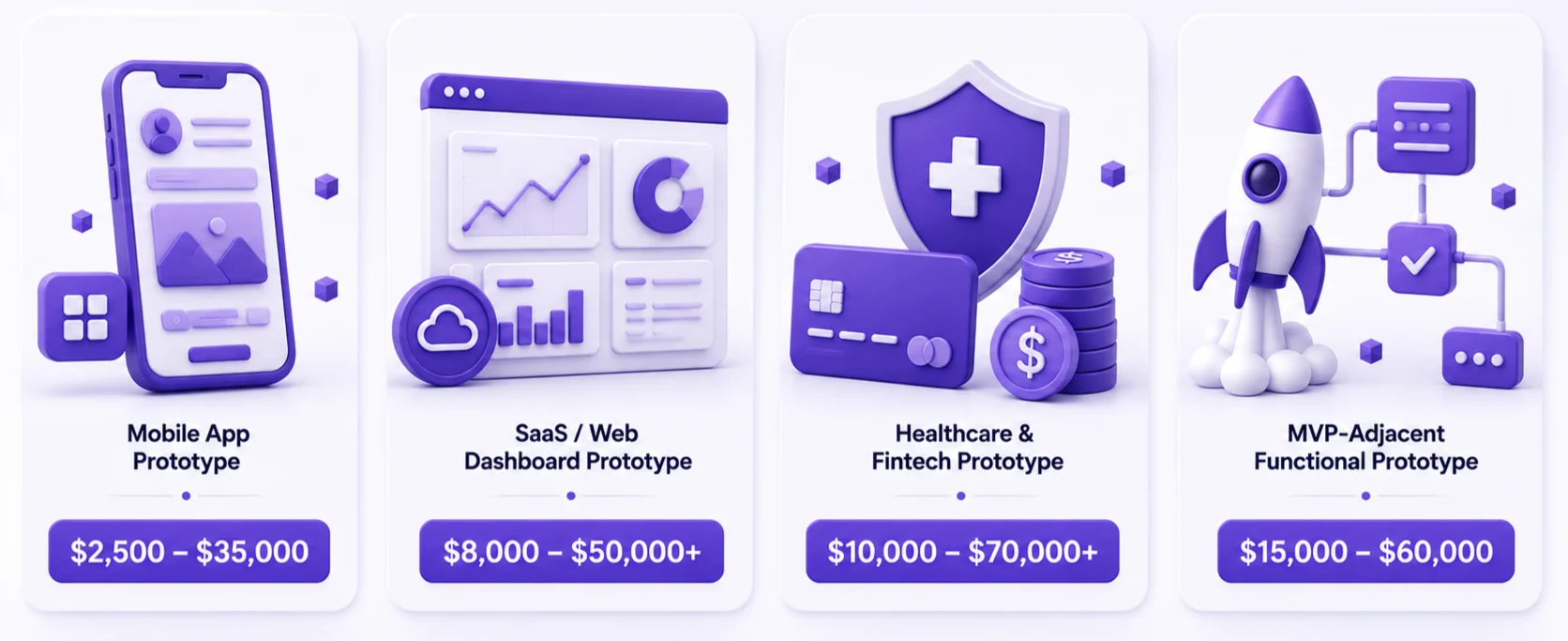
A simple mobile application with 5–10 screens typically costs between $2,500 and $8,000 for a clickable wireframe.
A high-fidelity mobile app prototype cost generally ranges from $8,000 to $20,000. Investor-ready consumer applications often require budgets between $15,000 and $35,000.
Many founders working with a specialized startup app development company begin with a prototype to validate ideas before committing to development budgets
SaaS or Web Dashboard Prototype
SaaS products require more sophisticated interactions, permission management, reporting interfaces, and workflow states.
A mid-fidelity SaaS prototype typically costs between $8,000 and $25,000. Enterprise-grade high-fidelity SaaS prototypes often exceed $50,000.
Healthcare and Fintech Applications
Compliance-driven industries require additional states, security workflows, consent management, and error handling.
Healthcare and fintech prototypes commonly cost 20–40% ($10,000 to $70,000+) more than standard consumer applications due to increased interaction complexity.
MVP-Adjacent Functional Prototype
Some teams require a partially functional prototype capable of demonstrating core workflows using real data.
These projects often bridge the gap between prototyping and MVP development and typically range from $15,000 to $60,000.
Businesses often combine functional prototypes with product discovery services to reduce uncertainty before investing in a full MVP.
Real-World Apps That Proved the Value of Rapid Prototyping Before Full Development
One of the biggest misconceptions founders have about rapid prototyping cost is that it adds an extra expense to the product budget. In reality, the most successful digital products use prototypes to avoid wasting hundreds of thousands of dollars on invalidated ideas. These examples show how companies used early validation, simplified prototypes, and iterative testing to reduce risk, control development costs, and accelerate product-market fit.
Dropbox: A Prototype Video That Saved Months of Development Costs
Before investing heavily in engineering, Dropbox created a simple prototype video demonstrating how the product would work. Instead of spending hundreds of thousands of dollars building a complete cloud-storage platform, the team first tested whether users actually wanted the solution. This way, they validated demand before making a major engineering investment.
The result was immediate demand validation and thousands of sign-ups. This approach transformed what could have been a six-figure development gamble into a low-cost validation exercise. Dropbox remains one of the best examples of how rapid prototyping can dramatically reduce product development risk while generating market confidence before code is written.
Estimated validation cost: A few thousand dollars versus potentially hundreds of thousands in premature development.
Airbnb: Testing a Marketplace Concept Before Building a Scalable Platform
Airbnb did not start with a sophisticated booking engine or enterprise-grade platform. The founders launched a simple prototype website to test whether travelers would pay to stay in strangers’ homes.
By validating user behavior first, Airbnb avoided investing in complex marketplace features that might never have been used. The initial prototype allowed the company to gather real customer feedback and refine the business model before significant development spending occurred.
Insight: Validate user behavior before scaling technology.
Cost impact: Reduced initial product investment while proving a completely new market category.
Uber: Validating the Core Booking Experience Before Expanding Features
Uber’s earliest product focused on a single core action: requesting a ride. Rather than investing in advanced pricing systems, loyalty programs, and large-scale infrastructure from day one, the company validated the booking experience first.
This rapid prototyping mindset helped the team identify what users truly valued before expanding the platform. By focusing development resources on the highest-impact workflow, Uber avoided unnecessary spending on features that were not essential to early adoption.
Many startups make the mistake of prototyping every feature. Uber demonstrated the opposite approach: validate the critical workflow first and scale later.
Insight: Prototype the core value proposition, not the entire product.
Cost impact: Faster market entry and lower initial development investment.
Hungama: Reducing UX Rework Costs for a High-Traffic Entertainment Platform
When developing digital entertainment experiences like Hungama, user engagement depends heavily on content discovery, navigation flows, and personalization. Building these features directly into production without testing can create expensive redesign cycles later.
Through rapid prototyping and UX validation, critical user journeys could be refined before development teams invested significant engineering effort. Early testing helped identify usability improvements and interaction bottlenecks before launch.
For content-heavy platforms, prototype-stage improvements often eliminate costly post-launch changes and reduce development rework by ensuring the product architecture aligns with actual user behavior.
Insight: Validate user journeys before investing in large-scale engineering.
Cost impact: Lower redesign costs and faster development execution.
eGurukul: Using Prototypes to Validate Learning Experiences Before Development
Educational applications involve multiple user journeys, including onboarding, course navigation, assessments, progress tracking, and content consumption. Building all these workflows without testing creates significant development risk.
For eGurukul, prototyping helped validate how learners interact with educational content before full-scale implementation. This allowed design and product teams to identify friction points early and optimize learning flows before development resources were committed.
For startups in edtech, healthcare, or SaaS, this approach can significantly reduce the cost of rebuilding features after launch.
Insight: Test complex user workflows before coding them.
Cost impact: Reduced feature rework and improved development efficiency.
Rapid Prototyping Costs Far Less Than Product Rework
Across Dropbox, Airbnb, Uber, Hungama, and eGurukul, the common pattern is clear: successful products validate assumptions before committing to full development budgets. Furthermore, whether through clickable prototypes, workflow testing, UX validation, or MVP-style experiments, early-stage prototyping helps teams avoid expensive mistakes.
The need for faster product validation will continue to grow. The World Economic Forum’s Future of Jobs Report 2025 found that 60% of employers expect digital technologies to significantly transform their business operations by 2030.
For most startups, a $5,000–$20,000 prototype investment can prevent $50,000–$200,000+ in development rework, making rapid prototyping one of the highest-ROI activities in the entire product development lifecycle.

Prototype vs. MVP: What’s the Cost Difference?
Many founders evaluating MVP and prototype development costs use these terms interchangeably. However, they represent very different investments.
Here is a table for quick comparison:
| Features | Prototype | MVP |
| Purpose | Validate UX and assumptions | Validate market demand |
| Functionality | Simulated | Functional |
| Typical Cost | $2,000–$50,000 | $25,000–$150,000+ |
| Timeline | Days to Weeks | Weeks to Months |
| Best For | Early Validation | Market Launch |
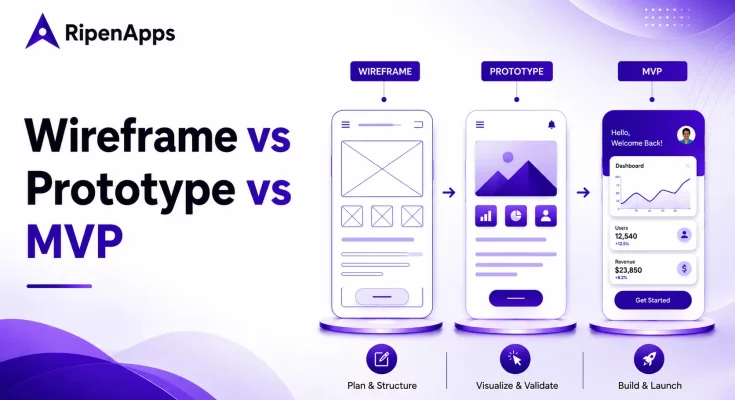
A prototype is a visual and interactive representation of a product. It demonstrates workflows, user journeys, and design concepts but does not include a production-ready backend.
An MVP is a working software product with real functionality. Users can create accounts, submit data, and interact with core features.
The decision framework is straightforward. If you’re trying to determine whether the product should be built, start with a prototype. If you’re validating whether customers will pay for it, move to an MVP. Most successful startups progress through both stages sequentially. Many companies transition from prototyping to MVP development services once user flows and product assumptions have been validated
For founders evaluating budgets, MVP development services typically represent the next investment phase after successful prototyping.
Is Rapid Prototyping Worth the Cost?
Many founders initially view rapid prototyping pricing as an additional expense. In reality, it functions as risk insurance, especially when paired with a reliable product designing service, where early UX validation becomes a core part of the development strategy rather than an afterthought.
Consider a startup planning an $80,000 development project. A $10,000 prototype that uncovers critical usability issues before development begins may prevent tens of thousands of dollars in redesign and engineering rework later.
The hidden cost of skipping prototyping often includes:
- Building features users don’t need
- Delayed product launches
- Increased engineering rework
- Investor skepticism
- Lower product adoption rates
The math is compelling. If a prototype prevents even one major development rework cycle, the investment often delivers a 3–5x return.
At RipenApps, teams frequently observe startups spending substantially more during initial development sprints when UX assumptions are not validated beforehand. In fact, in many cases, a structured prototype phase identifies issues that would otherwise emerge during development at significantly higher costs.
The rapid growth of the prototyping market further reinforces this trend. Businesses increasingly recognize rapid prototyping services as a strategic investment rather than a design expense.
Proven Ways to Reduce Rapid Prototyping Costs in 2026
Reducing rapid prototyping costs does not require compromising quality. Whether you’re building an enterprise platform or exploring rapid prototyping ideas for startups, smart product teams focus on efficiency, scope control, and strategic tooling to maximize value while keeping budgets under control.
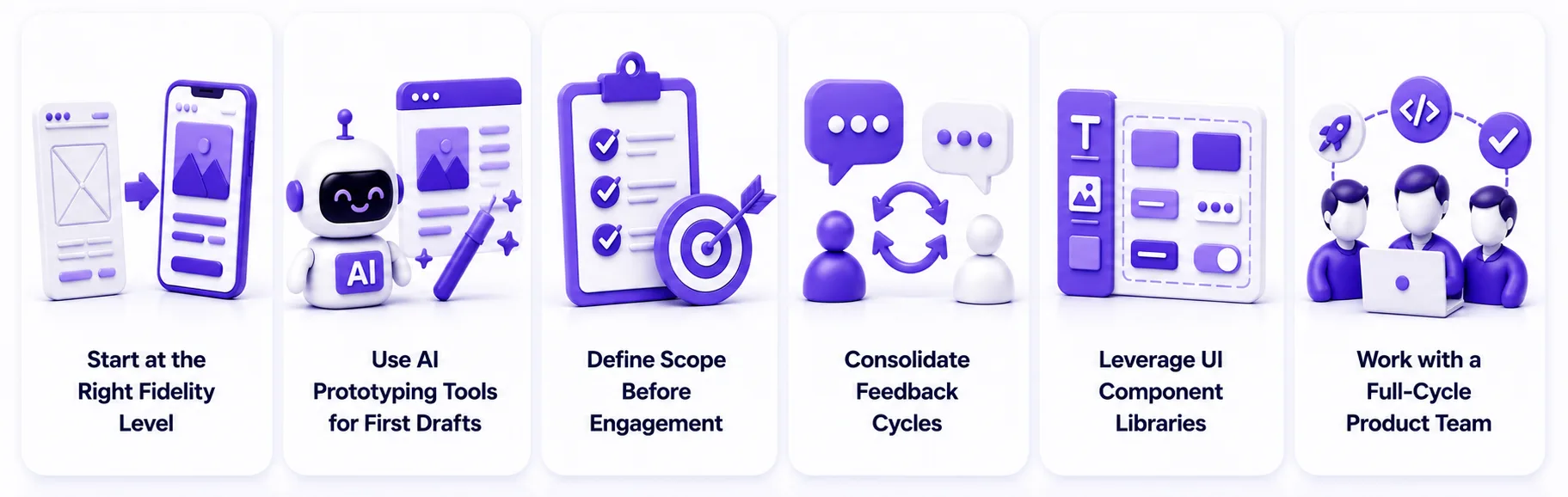
1. Start at the Right Fidelity Level
Avoid investing in a $25,000 high-fidelity prototype when a $3,000 clickable wireframe can validate the same assumption. Match fidelity to the decision you need to make.
2. Use AI Prototyping Tools for First Drafts
AI-powered tools such as Figma AI, Galileo AI, Uizard, and Lovable accelerate wireframing and layout generation. They can reduce early-stage design effort by 30–50%.
3. Define Scope Before Engagement
Unclear requirements create budget overruns. Establish screen counts, user flows, and prototype objectives before work begins.
4. Consolidate Feedback Cycles
Scattered feedback increases revision costs. Conduct structured review sessions and batch comments into planned iteration rounds.
5. Leverage UI Component Libraries
Design systems and UI kits such as Material Design, Ant Design, and iOS Human Interface Guidelines reduce custom design work and lower prototype design cost by 20–30%.
Organizations investing in UI UX development services often achieve smoother development handoffs by selecting tools that align with engineering workflows.
6. Work with a Full-Cycle Product Team
One of the highest hidden costs in product development is rebuilding designs during implementation.
However, when prototyping and development are handled by the same team, knowledge transfer improves, timelines shrink, and overall project efficiency increases.
As a result, organizations seeking UI/UX design services often achieve better long-term economics by partnering with teams capable of supporting both validation and development phases.
How Long Does Rapid Prototyping Take? (Timeline vs. Cost)
Timeline and cost are closely connected. Faster delivery generally increases project costs, while realistic timelines allow teams to optimize resources.
Here is a table for easy comparison:
| Fidelity Level | Typical Timeline | Cost Impact |
| Lo-Fi Wireframes | 1–3 Days | Lowest Cost |
| Mid-Fi Interactive Prototype | 1–2 Weeks | Moderate Cost |
| Hi-Fi Clickable Prototype | 2–4 Weeks | Highest Cost |
| AI-Assisted Prototype | 1–5 Days | Reduced Cost |
A compressed timeline often requires additional resources, overtime, or accelerated review cycles.
For web-based products, website wireframe design is often the fastest and most affordable way to validate navigation structures and user journeys.
For most startups, the most efficient engagement spans two to three weeks with clearly defined milestones and review checkpoints.
When investor meetings, fundraising deadlines, or product launches create urgency, businesses should expect budget increases of approximately 15–20% to accommodate accelerated delivery.
Selecting the right fidelity level remains the most effective way to balance speed, quality, and cost.
Final Thoughts
Rapid prototyping costs in 2026 vary widely, but the strategic value remains consistent. Whether you’re building a mobile app, SaaS platform, healthcare solution, or enterprise product, investing in validation before development significantly reduces risk and improves resource allocation. As demonstrated in many rapid prototyping guides, the question for most organizations is no longer how much rapid prototyping costs, but how much it costs to skip it.
At RipenApps, we’ve helped startups, enterprises, and product innovators transform ideas into validated digital experiences through structured rapid prototyping services, product discovery, and end-to-end development. By combining design expertise, business strategy, and engineering execution, our team helps organizations reduce prototype development cost, accelerate decision-making, and launch products with greater confidence and measurable business impact.

FAQs
Q1. How much does rapid prototyping cost for an app?
App prototyping cost in 2026 ranges from approximately $2,000 for basic wireframes to more than $50,000 for investor-ready high-fidelity interactive prototypes.
Q2. What is the difference between rapid prototyping cost for digital and physical products?
Digital prototypes are priced based on design complexity, screen count, and interactions. Physical prototypes depend on manufacturing methods, materials, and engineering requirements.
Q3. Is a prototype cheaper than an MVP?
Yes, significantly. Prototype development costs typically range from $2,000–$50,000, while MVP development often starts at $25,000 and can exceed $150,000. A startup validates prototype ideas and then enhances it with user experience feedback, whereas an MVP is a functional product built for real users. Most startups prototype first to reduce risk before investing in development.
Q4. How can I reduce rapid prototyping costs?
Start with the right fidelity level, define scope clearly, use AI-powered prototyping tools, leverage UI component libraries, and limit unnecessary revision rounds. These strategies can reduce prototyping costs by 20–40% without compromising validation quality.
Q5. How long does rapid prototyping take?
Rapid prototyping typically takes 1 day to 4 weeks, depending on complexity and fidelity. For example, basic wireframes can be completed in days, while high-fidelity interactive prototypes usually require several weeks.
Q6. What factors affect rapid prototyping cost the most?
The biggest cost drivers are fidelity level, product complexity, screen count, interaction depth, team structure, location, and iteration cycles. More screens, advanced interactions, and additional revisions generally increase costs.
Q7. Is rapid prototyping worth the investment?
Yes. Rapid prototyping helps validate ideas early, reduce development risk, and avoid costly rework later. Additionally, a relatively small prototype investment can save significant time and money during product development, improve product-market fit, and help businesses optimize their overall MVP development cost by identifying usability and functionality issues before full-scale development begins.
SHARE
WRITTEN BY

Ishan Gupta
CEO & Founder
Ishan Gupta is a seasoned entrepreneur and CEO with extensive 8+ years of experience in business and mobile app development landscape. He believes that the right digital product allows companies to focus on what they do best, while technology handles the rest. With deep exposure to global markets, he understands what makes an app succeed. His approach translates business needs into clear product strategies, ensuring that every feature contributes to measurable ROI.
View All Articles


 India
India USA
USA Australia
 Canada
 UK
UK UAE
UAE