



Key Takeaways
- Building an AI-powered fintech app requires balancing development costs, compliance requirements, AI capabilities, and long-term scalability from day one.
- An MVP helps validate your fintech product faster while controlling initial investment before expanding AI-powered financial features.
- AI features like fraud detection, financial assistants, and predictive analytics significantly influence both development and maintenance costs.
- Security, banking integrations, cloud infrastructure, and regulatory compliance are critical factors determining overall fintech app development costs.
- Choosing the right development partner ensures faster delivery, scalable architecture, and a future-ready AI fintech application with measurable business value.
The global financial services industry is undergoing a major transformation as artificial intelligence reshapes how people save, invest, make payments, manage expenses, and interact with digital banking platforms. Instead of offering only basic financial transactions, today’s fintech applications are becoming intelligent financial ecosystems capable of providing personalized insights, automating financial decisions, detecting fraud in real time, and delivering AI-powered customer support.
This shift has significantly changed how businesses approach product development. Startups, financial institutions, and digital banking providers are no longer planning traditional fintech products alone. They are evaluating AI-powered financial assistants, intelligent automation, fraud detection models, recommendation engines, and large language models to create differentiated user experiences and gain a competitive advantage in an increasingly competitive financial services market.
As a result, one of the biggest questions founders and product leaders ask during product planning is no longer simply, “How much does it cost to build a fintech app?” Instead, they want to understand the complete investment required to build an AI-powered financial product that can compete with modern digital banking platforms such as Revolut. Partnering with an experienced FinTech product development company helps businesses validate product ideas, prioritize AI capabilities, address compliance requirements, and build scalable financial solutions that align with long-term business goals.
The answer depends on several factors, including product complexity, AI implementation, banking integrations, regulatory compliance, security architecture, cloud infrastructure, and long-term maintenance requirements. This guide explores the fintech app development cost in 2026, breaking down estimated budgets, AI feature investments, development phases, and the major factors influencing overall pricing. Whether you’re validating an MVP or planning an enterprise-scale digital banking platform, you’ll gain practical insights to estimate costs accurately and make informed product decisions.
Table of Contents
FinTech App Development Cost At a Glance
Building an AI-powered fintech app typically costs between $50,000 and $500,000+, depending on the AI features, banking integrations, security requirements, regulatory compliance, and overall product complexity. MVPs generally start at around $50,000, while enterprise-grade fintech platforms with advanced AI capabilities and complex financial workflows require significantly larger investments.
FinTech App Development Cost Breakdown
| Development Stage | Estimated Investment |
| MVP FinTech Application | $50,000–$100,000 |
| Growth-Stage AI FinTech Platform | $100,000–$250,000 |
| Enterprise AI Banking Platform | $250,000–$500,000+ |
What Influences the Final Cost?
Several factors determine where a fintech product falls within these investment ranges. The first is the overall product scope. Applications offering basic account management and payment functionality require considerably less effort than platforms supporting lending, investments, wealth management, insurance, or multi-country banking operations.
Artificial intelligence is another major cost driver. Integrating AI-powered financial assistants, fraud detection systems, recommendation engines, predictive analytics, or large language models increases both development effort and ongoing operational costs because these capabilities require additional infrastructure, model management, monitoring, and continuous optimization.
Regulatory compliance also plays a significant role. FinTech products handling financial transactions and customer data must invest in security architecture, compliance processes, and industry-specific regulatory requirements, all of which directly influence development budgets.
Finally, integration complexity impacts pricing. Connecting with banking systems, payment gateways, identity verification providers, and financial data services requires additional engineering effort, testing, and maintenance throughout the product lifecycle.
Together, these variables explain why two fintech products with similar user interfaces can differ substantially in overall development cost. The following sections break down these cost drivers in greater detail while exploring what it takes to build an AI-powered application inspired by Revolut.
What is an AI FinTech App?
A FinTech application is a software solution that enables users and businesses to access financial services digitally. These services may include payments, digital banking, lending, investments, budgeting, wealth management, insurance, or money transfers. Traditional fintech applications primarily focus on digitizing financial processes, making transactions faster, more accessible, and more convenient than conventional banking systems.
An AI FinTech app builds on this foundation by integrating artificial intelligence into the financial experience. Rather than simply allowing users to perform financial transactions, the role of AI in FinTech applications is to analyze financial data, automate routine tasks, provide personalized recommendations, detect suspicious activities, and assist users in making informed financial decisions.
Artificial intelligence enables fintech platforms to move from reactive systems to proactive financial assistants. Instead of waiting for users to search for information, AI can identify spending patterns, forecast cash flow, recommend savings opportunities, highlight unusual transactions, and provide contextual financial guidance in real time.
This evolution is particularly important for digital banking platforms. Modern users expect intelligent experiences that go beyond account management. They want instant support, personalized financial insights, seamless onboarding, enhanced security, and automation that simplifies complex financial decisions.
As a result, AI has become a key differentiator in fintech product development. organizations planning new financial products increasingly evaluate AI capabilities alongside traditional banking functionality because intelligent features improve user engagement while creating stronger competitive advantages. Partnering with experts in AI-powered product development consulting helps businesses identify the right AI use cases, define scalable product strategies, and integrate intelligent capabilities that deliver measurable business value while accelerating digital transformation.
Traditional Banking App vs AI Banking App
Although both types of applications deliver digital financial services, their capabilities differ significantly. A traditional banking application focuses on enabling secure financial transactions and account management, while an AI-powered banking application continuously analyzes financial information to deliver personalized, intelligent, and automated experiences.
Traditional banking platforms generally allow users to view balances, transfer funds, pay bills, access transaction history, and manage accounts. Their primary objective is to digitise banking services while maintaining security and regulatory compliance.
AI-powered banking applications extend these capabilities by introducing intelligent automation throughout the customer journey. They can categorise expenses automatically, monitor spending behavior, identify potential fraud in real time, answer customer queries through AI assistants, recommend financial products based on user behavior, and generate personalized financial insights.
From a development perspective, this distinction has a direct impact on overall project cost. Building an AI banking application requires additional investment in AI model integration, data processing pipelines, cloud infrastructure, monitoring, inference, and continuous optimization beyond the core banking platform itself.
Consequently, businesses planning AI-enabled financial products should evaluate both traditional development requirements and the additional costs associated with implementing intelligent features that deliver long-term customer value.
Revolut Features vs AI-Powered Banking Features
Revolut has become one of the most recognised examples of modern digital banking by combining multiple financial services within a single application. Its platform demonstrates how users increasingly expect payments, savings, budgeting, international transfers, investment options, and financial management tools to exist within one connected ecosystem.
However, as artificial intelligence continues to reshape financial services, the next generation of fintech products is evolving beyond feature-rich digital banking platforms. AI introduces capabilities that transform how users interact with financial applications rather than simply expanding the list of available services.
For example, instead of manually reviewing transactions, users can receive AI-generated spending insights. Rather than searching through budgeting tools, intelligent systems can recommend savings opportunities based on historical financial behavior. Fraud detection becomes proactive instead of reactive, while AI assistants provide conversational support and personalized financial guidance without requiring human intervention.
This shift also changes the economics of product development. Replicating the functionality of a modern digital banking platform already requires significant investment in infrastructure, security, compliance, and integrations. Adding AI-powered capabilities introduces additional development effort related to model integration, inference, monitoring, and ongoing optimization, making AI implementation one of the most influential factors in determining overall fintech app development cost.
For organizations planning an application inspired by Revolut, the objective is no longer to recreate existing banking features alone. The opportunity lies in combining secure financial services with intelligent experiences that improve personalisation, automation, fraud prevention, and customer engagement while supporting long-term product scalability.
FinTech App Development Cost Breakdown for an AI App Like Revolut
After understanding what an AI-powered fintech application is, the next question is how much investment is required to build one. While there is no universal pricing model, most fintech products fall into three development stages based on business goals, feature complexity, scalability, regulatory requirements, and AI capabilities.
An early-stage startup validating its idea requires a different level of investment than a fast-growing fintech company expanding its user base. Similarly, an enterprise building a regulated digital banking platform with advanced AI capabilities will require significantly higher development resources than an MVP focused on core financial services.
The estimates below provide a practical framework for budgeting an AI-powered fintech product inspired by Revolut while highlighting how costs increase as the platform evolves.
MVP FinTech Application
Estimated Cost: $50,000–$100,000
The MVP stage focuses on validating the product idea with a functional application that delivers core financial services while keeping development costs under control. Rather than building a comprehensive banking platform, the objective is to launch quickly, gather user feedback, and verify market demand before investing in advanced functionality.
At this stage, businesses typically prioritize essential features such as user registration, secure authentication, account management, payments, transaction history, notifications, and basic budgeting capabilities. AI implementation remains limited to high-impact use cases that improve user experience without significantly increasing development complexity.
A lightweight AI-powered financial assistant or basic expense categorization can be introduced during the MVP phase to differentiate the product while maintaining a manageable development budget. Security, cloud infrastructure, and regulatory considerations are also incorporated from the beginning, ensuring the product is built on a scalable foundation.
For startups and early-stage fintech businesses, an MVP provides the fastest path to product validation while reducing initial investment risk.
Growth-Stage AI FinTech Platform
Estimated Cost: $100,000–$250,000
Once the MVP demonstrates market traction, the focus shifts from validation to expansion. The platform evolves into a more comprehensive financial ecosystem capable of supporting a growing customer base, increased transaction volumes, and intelligent automation.
During this stage, businesses typically enhance the application with more advanced AI capabilities, improved customer experiences, and deeper financial integrations. Intelligent expense categorization becomes more accurate, fraud detection systems become more sophisticated, and recommendation engines begin delivering personalized financial insights based on customer behavior.
Additional banking integrations, stronger security controls, enhanced compliance capabilities, and improved infrastructure also become necessary as the platform scales.
From a development perspective, this phase represents a significant increase in investment because AI implementation extends beyond individual features into multiple customer journeys. Cloud infrastructure expands, monitoring becomes more advanced, and maintaining AI performance becomes an ongoing operational requirement.
Growth-stage platforms are designed for fintech companies transitioning from product-market fit to sustainable business growth.
Enterprise Banking Platform
Estimated Cost: $250,000–$500,000+
Enterprise fintech platforms represent the highest level of investment due to their complexity, scalability, regulatory requirements, and intelligent automation capabilities.
Unlike MVPs or growth-stage products, enterprise platforms are expected to support large user bases, multiple financial products, high transaction volumes, sophisticated security frameworks, and continuous regulatory compliance while maintaining exceptional performance and reliability.
Artificial intelligence becomes deeply integrated across the platform rather than existing as isolated features. AI financial assistants provide contextual customer support, fraud detection continuously analyzes transactional behavior, predictive analytics assist financial decision-making, recommendation engines personalise user experiences, and intelligent automation streamlines operational workflows.
Building a platform at this level also requires advanced backend architecture, resilient cloud infrastructure, comprehensive monitoring systems, security audits, compliance management, and long-term scalability planning.
For established financial institutions, digital banks, and enterprise fintech organizations, development investment extends beyond application delivery into creating a secure, intelligent financial platform capable of supporting continuous innovation.
Major Factors Affecting FinTech App Development Cost
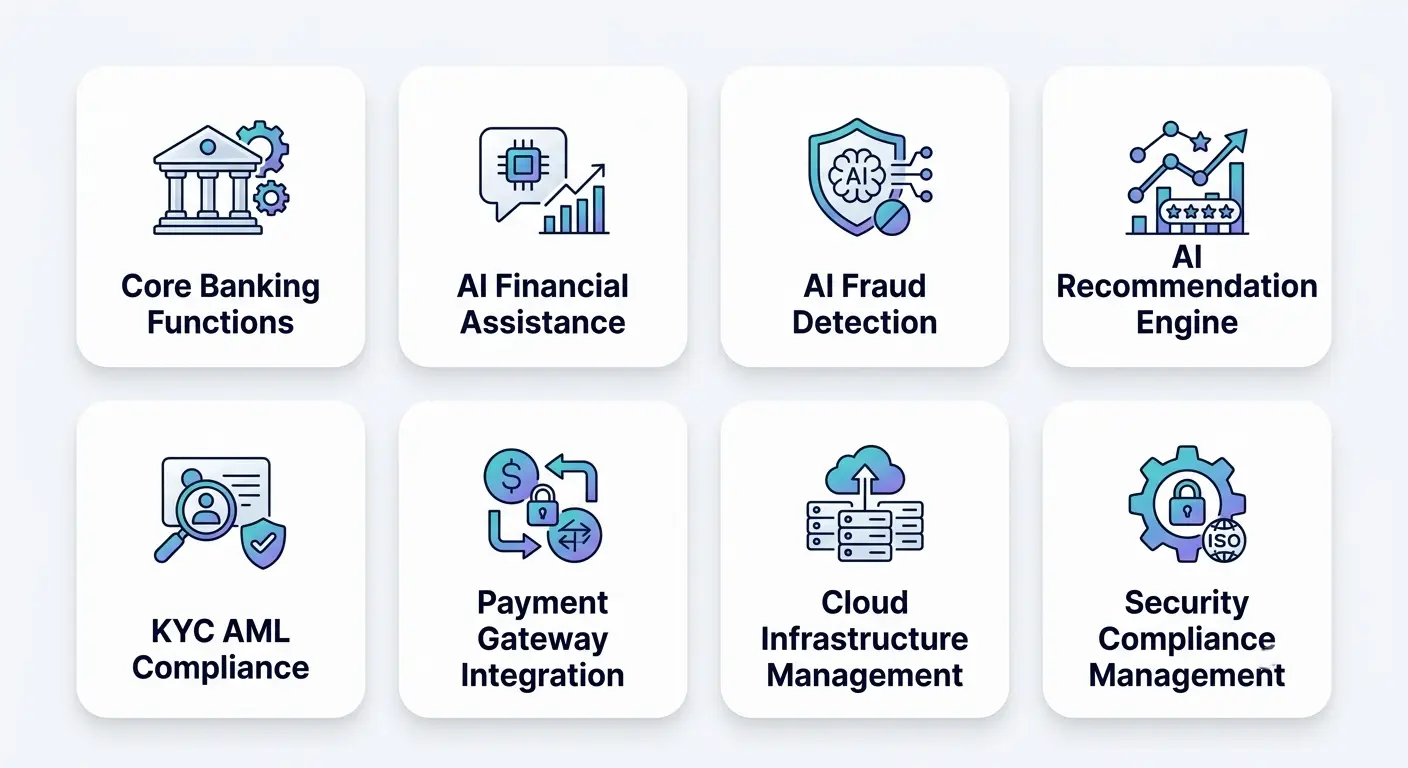
No two fintech applications require the same investment because every product differs in functionality, technical architecture, regulatory obligations, and AI implementation. While the development stage establishes a broad pricing range, the final budget is determined by several critical cost drivers.
Understanding these factors allows businesses to estimate development costs more accurately while identifying where strategic investments create the greatest long-term value.
Core Banking Features
Estimated Cost Impact: $15,000–$50,000
The foundation of every fintech application is its core banking functionality. Features such as user onboarding, account management, balance tracking, payments, fund transfers, transaction history, notifications, and financial dashboards form the backbone of the product. These capabilities typically represent the largest share of an MVP development budget because they require robust backend architecture, secure APIs, transaction processing, and extensive testing.
As additional banking capabilities are introduced, development effort increases due to expanded backend logic, database architecture, API integrations, testing requirements, and security implementation.
The broader the feature set, the higher the overall development investment. This is why FinTech app development requires careful planning to balance essential banking features, security requirements, scalability, and future AI capabilities while keeping development costs aligned with business objectives.
AI Financial Assistant
Estimated Cost Impact: $10,000–$40,000
One of the defining characteristics of modern fintech applications is the ability to provide intelligent financial assistance rather than simply facilitating transactions.
AI-powered financial assistants can answer customer questions, explain spending behavior, recommend financial actions, summarise account activity, and deliver personalized financial guidance through conversational interfaces.
Implementing these capabilities requires AI model integration, prompt orchestration, contextual data processing, inference infrastructure, monitoring systems, and continuous optimization, making AI assistants a significant contributor to overall development cost. Businesses often leverage AI feature integration services to seamlessly embed AI financial assistants into existing fintech applications, ensuring secure implementation, scalable performance, and an enhanced customer experience without disrupting core banking operations.
Fraud Detection AI
Estimated Cost Impact: $15,000–$50,000
Fraud prevention is one of the most valuable applications of AI within financial services.
Rather than relying solely on predefined rules, AI-driven fraud detection analyzes behavioral patterns, transaction histories, device information, and user activity to identify suspicious behavior in real time.
Building intelligent fraud detection systems requires machine learning models, behavioral analytics, risk scoring engines, continuous model training, monitoring pipelines, and integration with transaction workflows. These advanced capabilities increase both the initial development investment and ongoing operational costs but are essential for reducing fraud losses and protecting customer trust.
Recommendation Engine
Estimated Cost Impact: $8,000–$30,000
Recommendation engines improve customer engagement by delivering personalized financial experiences based on user behavior and transaction data.
These systems can recommend budgeting strategies, savings opportunities, financial products, investment options, or spending insights tailored to individual customers.
Developing recommendation engines involves collecting and processing behavioral data, implementing AI models, evaluating recommendation quality, and continuously refining prediction accuracy. The overall investment depends on the level of personalisation, data availability, and AI sophistication required by the platform.
KYC & AML Compliance
Estimated Cost Impact: $8,000–$25,000
Compliance remains one of the most critical considerations in fintech product development.
Know Your Customer (KYC) and Anti-Money Laundering (AML) processes help financial institutions verify user identities, monitor financial activity, and satisfy regulatory obligations.
Implementing secure onboarding workflows, identity verification systems, compliance monitoring, audit capabilities, sanctions screening, and regulatory reporting significantly increases development effort. While compliance adds to the overall project cost, it is a mandatory investment for launching regulated financial products.
Payment Gateway Integration
Estimated Cost Impact: $5,000–$20,000
Most fintech applications rely on multiple payment and financial service integrations to enable secure digital transactions.
Depending on the business model, integrations may include payment gateways, banking services, financial data providers, card processing systems, or mWallet app development or digital wallet infrastructure.
Each integration introduces additional engineering effort for API implementation, testing, security validation, certification, maintenance, and ongoing compatibility management. Applications supporting multiple payment providers or international transactions typically require a larger integration budget.
Cloud Infrastructure
Estimated Setup Cost: $5,000–$15,000
Cloud computing & infrastructure provides the scalability and reliability required to support AI-powered fintech applications.
As user numbers grow and AI workloads increase, businesses must expand computing resources, storage capacity, networking infrastructure, monitoring systems, and backup strategies.
AI capabilities introduce additional infrastructure requirements because model inference, data processing, and intelligent automation consume more computational resources than traditional application workloads. Although cloud operating costs continue after launch, businesses should also budget for the initial cloud architecture, deployment, security configuration, and DevOps setup during development.
Security & Regulatory Compliance
Estimated Implementation Cost: $20,000–$80,000
Security is a foundational requirement throughout the fintech development lifecycle. Applications handling financial transactions and sensitive customer information require secure authentication, encryption, role-based access control, data protection, monitoring, audit logging, penetration testing, and continuous security assessments.
According to IBM’s Cost of a Data Breach Report, the financial sector continues to experience some of the highest data breach costs, making security and regulatory compliance a business-critical investment rather than an optional expense. Implementing robust security controls early in the development process helps reduce financial risk, protect customer trust, and ensure business continuity.
Regulatory compliance further increases development complexity by requiring governance processes, documentation, security controls, and ongoing compliance management with standards such as PCI DSS, GDPR, SOC 2, or regional financial regulations. Although these investments increase development costs, they are essential for building trustworthy fintech platforms capable of operating within highly regulated financial environments.

FinTech App Development Cost by Development Phase
Knowing the overall investment required to build an AI-powered fintech application is only part of the budgeting process. Businesses also need to understand where that investment is allocated throughout the product development lifecycle.
Every phase contributes differently to the overall fintech app development cost. While some stages focus on planning and user experience, others involve engineering, AI implementation, regulatory compliance, testing, and deployment. Understanding this breakdown helps founders, CTOs, and financial institutions estimate budgets more accurately while identifying where strategic investments deliver the greatest business value.
Discovery
Estimated Cost: $5,000–$15,000
Every successful fintech product begins with a structured discovery phase. This stage focuses on defining business objectives, validating the product idea, identifying target users, analysing competitors, and determining the overall product scope.
For AI-powered fintech products, discovery also involves identifying where artificial intelligence creates measurable value. Businesses evaluate potential AI use cases such as financial assistants, fraud detection, personalized recommendations, predictive analytics, or intelligent automation before development begins.
A well-executed discovery phase reduces development risks, prevents unnecessary feature expansion, and creates a roadmap for efficient product delivery.
Product Strategy
Estimated Cost: $3,000–$10,000
Once the product vision is established, the next phase focuses on defining the overall product strategy.
This includes feature prioritisation, platform architecture, user journeys, scalability planning, AI implementation strategy, regulatory considerations, and technical feasibility. At this stage, businesses determine which capabilities belong in the MVP and which should be introduced during future product iterations.
A clear product strategy ensures development resources remain aligned with business objectives while avoiding unnecessary implementation costs.
UI/UX Design
Estimated Cost: $8,000–$25,000
User experience plays a critical role in fintech adoption because financial applications must balance simplicity with security.
During this phase, designers create user flows, wireframes, interface designs, prototypes, and interactive experiences that simplify complex financial tasks while maintaining user confidence.
For AI-powered applications, additional design effort is required to integrate conversational interfaces, intelligent recommendations, contextual financial insights, and AI-driven workflows into the overall customer experience.
An intuitive interface reduces user friction, improves engagement, and supports long-term product adoption.
Backend Development
Estimated Cost: $20,000–$70,000
Backend development forms the operational foundation of a fintech application.
This phase includes application architecture, business logic, databases, APIs, authentication systems, transaction processing, banking integrations, notification services, and cloud connectivity.
Because financial applications process sensitive customer information and high-value transactions, backend systems must be designed for reliability, scalability, and security from the outset.
As application complexity increases, backend engineering becomes one of the largest contributors to overall development cost.
Mobile Application Development
Estimated Cost: $20,000–$60,000
The mobile application represents the customer-facing layer of the product.
Developers build intuitive, responsive interfaces that allow users to access financial services securely across supported devices. Core banking functionality, payment workflows, account management, notifications, and financial dashboards are implemented during this phase.
For AI-powered fintech applications, mobile experiences also incorporate intelligent features such as AI assistants, personalized financial insights, expense categorization, and recommendation systems, creating a more engaging customer experience.
AI Model Integration
Estimated Cost: $15,000–$80,000
Artificial intelligence introduces an additional layer of development beyond traditional application engineering.
This phase focuses on integrating AI capabilities into the fintech platform. Depending on the product vision, this may include AI-powered financial assistants, intelligent expense categorization, fraud detection, predictive analytics, recommendation engines, or conversational banking experiences.
Model integration also involves connecting AI services with application workflows, ensuring reliable inference, monitoring model performance, and maintaining consistent user experiences across financial interactions.
Since AI capabilities require specialised engineering and infrastructure, this phase represents one of the most significant cost drivers in modern fintech software development.
Quality Assurance
Estimated Cost: $8,000–$20,000
Quality assurance ensures that every component of the application performs reliably before launch.
Testing covers application functionality, financial transaction workflows, security validation, API integrations, AI feature behavior, usability, performance, compatibility, and overall system stability.
For fintech products, rigorous testing is essential because even minor defects can affect financial accuracy, customer trust, and regulatory compliance.
Comprehensive quality assurance reduces operational risks while improving long-term product reliability.
Compliance Implementation
Estimated Cost: $10,000–$40,000
Compliance activities continue throughout development but become particularly important before deployment.
This phase focuses on implementing regulatory requirements, validating security controls, supporting audit readiness, documenting compliance processes, and ensuring the platform aligns with applicable financial regulations.
Compliance implementation also includes reviewing identity verification workflows, transaction monitoring processes, access controls, and operational governance.
Investing in compliance during development reduces future operational risks and supports sustainable product growth.
Deployment
Estimated Cost: $2,000–$8,000
Deployment marks the transition from development to production.
During this stage, the application is released within a secure cloud environment, infrastructure is configured for production workloads, monitoring systems are activated, and operational processes are established to support ongoing platform performance.
For AI-powered fintech applications, deployment also includes preparing AI services for production usage, enabling monitoring, supporting model reliability, and establishing processes for future optimization.
A structured deployment strategy ensures the application launches with stability while creating a foundation for continuous improvement as the product evolves.
AI Features That Increase FinTech App Development Cost
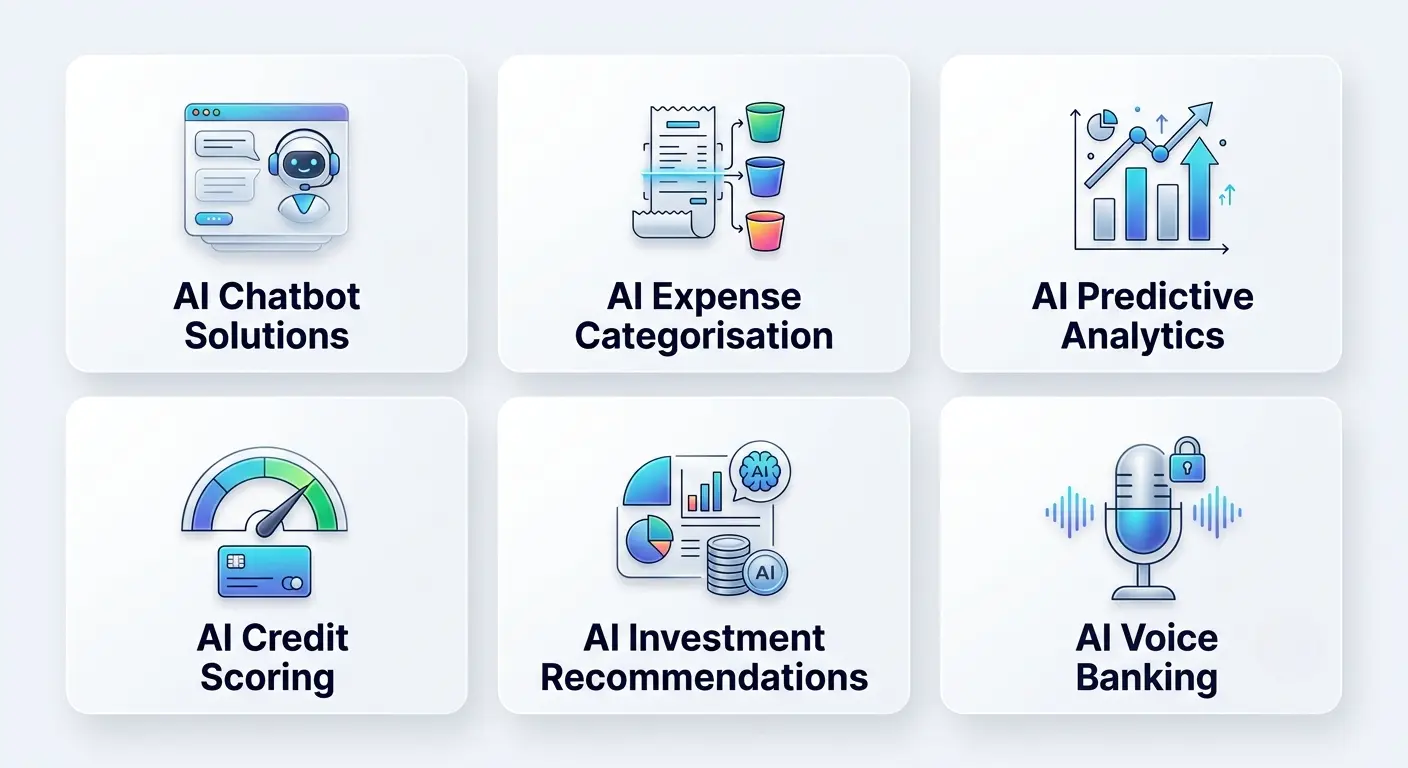
Artificial intelligence has become one of the biggest differentiators in modern financial applications. While these capabilities significantly improve customer experience and operational efficiency, they also increase overall development investment due to additional engineering effort, AI infrastructure, integration complexity, and ongoing optimization. Businesses looking to build intelligent financial products must carefully implement advanced AI capabilities that enhance automation, personalization, and decision-making while ensuring scalability, security, and long-term performance.
The following AI capabilities have the greatest influence on fintech app development cost.
AI Chatbot
According to McKinsey, generative AI has the potential to transform banking operations by improving employee productivity, enhancing customer service, and automating routine financial interactions. As a result, AI-powered conversational experiences have become a major investment area for fintech companies looking to improve customer engagement while reducing operational costs.
AI chatbots provide customers with instant conversational support by answering financial queries, assisting with account-related requests, guiding users through banking services, and reducing dependence on traditional customer support channels.
Implementing conversational AI requires LLM integration, prompt engineering, contextual understanding, conversation management, monitoring, and continuous refinement to deliver accurate, secure, and reliable customer interactions. Depending on the complexity of the chatbot, language capabilities, and integrations with banking systems, implementing an AI chatbot typically adds between $8,000 and $25,000 to the overall fintech app development cost.
Expense categorization
Automatically organising transactions into meaningful spending categories helps users better understand their financial behavior.
AI-powered expense categorization analyzes transaction data, identifies spending patterns, and continuously improves categorization accuracy over time, creating a more personalized financial management experience. The development cost for AI-powered expense categorization generally ranges from $5,000 to $20,000, depending on transaction volume, AI model complexity, and the level of automation required.
Predictive Analytics
Predictive analytics enables fintech platforms to identify trends, forecast financial outcomes, and generate proactive insights based on historical user data.
These capabilities support smarter financial planning, risk forecasting, customer behavior prediction, and personalized recommendations. Building predictive analytics requires advanced machine learning models, data pipelines, model training, and continuous optimization. As a result, businesses should expect to invest approximately $15,000 to $50,000 to implement predictive analytics features within a fintech application.
Credit Risk Scoring
AI-driven credit risk assessment improves lending decisions by analysing multiple financial variables rather than relying solely on conventional scoring methods.
Integrating intelligent credit evaluation introduces additional data processing, risk modeling, compliance validation, explainable AI requirements, monitoring, and ongoing model improvement. Depending on the complexity of the scoring engine and regulatory requirements, AI-powered credit risk scoring typically increases development costs by $20,000 to $60,000.
Personalized Investment Suggestions
Modern fintech applications increasingly use AI to deliver tailored investment recommendations based on user behavior, financial objectives, and investment preferences.
Building these recommendation capabilities requires intelligent data analysis, recommendation engines, portfolio modeling, and continuous optimization to maintain relevance, accuracy, and regulatory compliance. Developing AI-powered investment recommendation systems generally costs between $15,000 and $45,000, depending on the sophistication of the recommendation algorithms and data processing requirements.
Voice Banking
Voice-enabled banking allows users to interact with financial services through natural language conversations instead of traditional interfaces.
Developing voice banking experiences requires speech recognition, natural language understanding, conversational AI integration, voice authentication, secure banking workflows, and seamless integration with backend financial systems. Because of its advanced AI, speech processing, and security requirements, voice banking functionality can add approximately $20,000 to $70,000 to the overall development budget.
AI Budget Planner
AI-powered budget planners analyze spending behavior, identify financial trends, recommend savings opportunities, and help users manage their finances more effectively.
By continuously learning from customer behavior, these systems provide increasingly personalized budgeting experiences while enhancing long-term user engagement. The cost of implementing an AI-powered budget planner typically ranges from $8,000 to $30,000, depending on the level of personalisation, predictive capabilities, and AI model sophistication.
Choosing the Right Technology Stack
The technology stack chosen for an AI-powered fintech application directly impacts development speed, scalability, security, regulatory compliance, and long-term maintenance costs. Selecting modern, enterprise-grade technologies enables businesses to build secure financial platforms, integrate AI capabilities efficiently, and support future feature expansion without costly redevelopment.
| Layer | Recommended Technologies |
| Mobile Development | Flutter, React Native, Swift, Kotlin |
| Backend Development | Node.js, Java Spring Boot, .NET |
| AI & Machine Learning | OpenAI GPT-5, Claude, Gemini, TensorFlow |
| Database | PostgreSQL, MongoDB, Redis |
| Cloud Infrastructure | AWS, Microsoft Azure, Google Cloud Platform (GCP) |
| Payments & Banking APIs | Stripe, Plaid, Razorpay, Adyen |
| Authentication & Security | OAuth 2.0, JWT, AES-256 Encryption, Multi-Factor Authentication (MFA) |
| DevOps & CI/CD | Docker, Kubernetes, GitHub Actions, Jenkins |
| Monitoring & Analytics | Prometheus, Grafana, Datadog, Firebase Analytics |
Partnering with an experienced mobile app development company ensures businesses select the right technology stack, build secure and scalable fintech applications, and create future-ready digital banking solutions that support long-term growth.
How Long Does It Take to Build an AI FinTech App?
The development timeline for an AI-powered fintech application depends on product complexity, feature scope, AI implementation, banking integrations, compliance requirements, and testing efforts.
An MVP can generally be delivered within a shorter timeframe because it focuses on validating the product with essential banking functionality and limited AI capabilities. Growth-stage platforms require additional development cycles to support advanced AI features, expanded financial services, and larger user bases. Enterprise banking platforms demand the longest timelines due to extensive integrations, regulatory validation, intelligent automation, infrastructure planning, and comprehensive testing.
Rather than viewing development as a single release, most successful fintech products follow a phased delivery strategy. Businesses launch an MVP, gather customer feedback, expand AI capabilities, and continue improving the platform through iterative releases.
FinTech App Development Timeline
| Development Stage | Estimated Timeline |
| MVP FinTech Application | 4–6 Months |
| Growth-Stage AI Platform | 6–10 Months |
| Enterprise AI Banking Platform | 10–18+ Months |
Ongoing Costs of AI FinTech Applications
Launching a fintech application is only the beginning of the product lifecycle. Continuous maintenance ensures the platform remains secure, compliant, scalable, and capable of meeting evolving customer expectations.
For AI-powered fintech products, ongoing maintenance extends beyond traditional application support. Businesses must continuously manage AI inference, monitor model performance, maintain cloud infrastructure, implement security updates, support compliance requirements, and introduce new product features.
Cloud hosting expenses increase as user activity grows and AI workloads expand. Depending on application traffic, storage requirements, and computing resources, cloud hosting typically costs between $500 and $5,000 per month. AI models also require continuous monitoring and inference, with AI API usage and model-serving costs generally ranging from $1,000 to $10,000 per month, depending on the volume of AI requests and the models being used.
Security and compliance remain recurring investments throughout the product lifecycle. Businesses should budget approximately $5,000 to $20,000 annually for compliance audits, while continuous security monitoring, threat detection, and vulnerability management typically cost between $500 and $2,000 per month to protect financial data and maintain regulatory compliance.
Feature updates and application maintenance also contribute to long-term operational expenses. As customer expectations evolve and financial services continue to innovate, businesses regularly introduce new banking capabilities, AI enhancements, and user experience improvements. Annual maintenance generally represents 15% to 20% of the initial development cost, covering bug fixes, performance optimization, operating system updates, infrastructure improvements, and ongoing feature enhancements.
Planning for these long-term operational costs enables organizations to maintain product quality, ensure regulatory compliance, and continuously enhance AI capabilities while supporting sustainable business growth.
How to Reduce FinTech App Development Cost
Reducing development costs does not mean compromising product quality. Businesses can optimise investment by focusing on essential features, leveraging existing technologies, and scaling strategically.
- Launch with an MVP: Building an MVP instead of a full-featured platform can reduce initial development costs by 30–50% while enabling faster market validation.
- Use Pre-built APIs: Integrating third-party solutions for KYC, AML, payments, and banking services can reduce engineering effort by 20–40% compared to building these capabilities from scratch.
- Adopt a Cloud-Native Architecture: Using scalable cloud infrastructure and managed services can lower infrastructure and operational costs by 25–35% over the long term.
- Implement AI in Phases: Prioritising high-impact AI features first can reduce initial AI development costs by 20–40% while allowing future expansion based on user demand.
By following these strategies, businesses can significantly reduce fintech app development costs while maintaining security, scalability, and compliance.
Build vs Buy: Custom Development vs White-Label FinTech Platform
One of the most important strategic decisions organizations face is whether to build a custom fintech application or adopt a white-label platform.
A white-label solution offers a faster path to market because many core banking capabilities already exist. This approach can reduce initial development effort and simplify implementation for organizations with straightforward business requirements.
However, white-label platforms often provide limited flexibility when introducing advanced AI capabilities, unique customer experiences, or specialised financial products. Customisation options may also become increasingly restricted as business requirements evolve.
Custom development requires a greater initial investment but offers complete control over product architecture, feature roadmap, AI implementation, integrations, scalability, and customer experience. organizations can introduce intelligent financial assistants, recommendation engines, fraud detection systems, and future AI innovations without being constrained by third-party platform limitations.
For businesses planning long-term digital banking products with differentiated AI capabilities, custom development provides greater flexibility to innovate while supporting sustainable product growth.
Build vs Buy Comparison
| Custom Development | White-Label Platform |
| Complete ownership of product architecture | Pre-built platform with limited flexibility |
| Fully custom AI implementation | Restricted AI customisation |
| Flexible integrations and scalability | Limited integration capabilities |
| Supports long-term innovation | Faster initial deployment |
| Higher upfront investment | Lower initial development cost |
Why Partner with RipenApps for FinTech App Development?
Building an AI-powered fintech application requires expertise that goes beyond software development. It demands a deep understanding of financial workflows, AI integration, secure architecture, regulatory requirements, and scalable cloud infrastructure. At RipenApps, we combine technical excellence with a product-first approach to help startups and enterprises launch secure, intelligent fintech solutions that are built for long-term growth.
Our experience extends across regulated industries where security, compliance, and reliability are critical. For example, we developed Mednovate Connect, a secure healthcare platform with cloud-native architecture and protected data workflows, demonstrating our ability to build applications that meet stringent security and scalability requirements. We have also delivered AI-enabled digital products such as Holypills, helping businesses integrate intelligent features that improve user engagement and operational efficiency.
Similarly, our work on CoTax reflects our experience in building digital solutions around complex business and financial workflows. The project required a secure and reliable application environment designed to support sensitive information and streamlined user interactions, reinforcing our ability to develop technology products where data protection, scalability, and usability are equally important.

Final Thoughts
The evolution of artificial intelligence is reshaping how fintech products are planned, built, and scaled. Businesses are no longer investing only in digital banking functionality. They are creating intelligent financial platforms capable of delivering personalized experiences, automating financial decisions, strengthening fraud prevention, and improving customer engagement through AI-powered capabilities.
Understanding fintech app development cost requires evaluating more than the initial development budget. Product scope, AI implementation, compliance requirements, banking integrations, infrastructure, security, and long-term maintenance all contribute to the overall investment required to build a successful fintech application. Many businesses partner with experts offering generative AI development services to accelerate AI adoption, streamline implementation, and build intelligent financial solutions that remain secure, scalable, and compliant.
For organizations planning an AI-powered financial product inspired by modern digital banking platforms such as Revolut, a structured development strategy provides the strongest foundation for long-term growth. Beginning with a well-defined product vision, prioritising high-impact AI capabilities, and investing in scalable architecture enables businesses to control costs while creating secure, future-ready financial applications.

FAQs
1. How much does it cost to build a fintech app?
The fintech app development cost typically ranges from $50,000 to $500,000+, depending on the application’s complexity, AI capabilities, banking integrations, compliance requirements, infrastructure, and scalability.
2. How much does it cost to build an AI app like Revolut?
The investment depends on the product scope and AI implementation. An MVP generally requires a lower budget, while enterprise-scale AI banking platforms involve significantly higher costs because of advanced AI features, security, compliance, and infrastructure.
3. How do you build a compliant fintech app?
Building a compliant fintech application involves incorporating regulatory requirements, security controls, identity verification processes, transaction monitoring, audit capabilities, and governance throughout the development lifecycle.
4. What is a fintech app?
A fintech app is a digital application that provides financial services such as payments, banking, lending, investments, budgeting, or wealth management. AI-powered fintech applications extend these capabilities with intelligent automation, personalized insights, and predictive financial experiences.
5. Can fintech apps replace traditional checking accounts?
Modern fintech applications can deliver many services traditionally associated with checking accounts, including payments, money transfers, budgeting, and account management. However, their capabilities depend on the business model, financial partnerships, and regulatory framework.
6. Is AI expensive to implement in fintech apps?
AI implementation increases development investment because it requires additional engineering, model integration, infrastructure, monitoring, and continuous optimization. The overall cost depends on the complexity and number of AI-powered features included in the product.
7. How long does AI fintech app development take?
Development timelines vary by product scope. MVPs generally require several months, while enterprise AI banking platforms can take more than a year due to expanded features, compliance, integrations, and AI implementation.
8. What is the ongoing maintenance cost of an AI fintech app?
Ongoing maintenance includes cloud hosting, AI inference, monitoring, security updates, compliance management, infrastructure maintenance, and continuous feature improvements. These operational investments ensure the application remains secure, scalable, and competitive.
Discuss your project and request for proposal
SHARE
WRITTEN BY

Vaibhav Sharma
Business Head
Vaibhav Sharma bridges product vision with real-world execution. He shares consultation with startups and enterprises to shape digital strategies, refine user journeys, and create app experiences that feel intuitive from day one. His strength lies in transforming early concepts into clear development roadmaps that set products up for long-term success.
View All Articles