


Key Takeaways
- Modern web applications improve customer engagement, operational efficiency, scalability, and long-term digital business growth simultaneously.
- Cloud-native web applications help businesses reduce infrastructure costs while supporting flexible and scalable digital operations.
- SaaS platforms enable recurring revenue generation, centralized management, and seamless accessibility across multiple devices globally.
- Businesses modernizing legacy applications gain improved security, scalability, operational agility, and stronger customer experiences overall.
- Emerging technologies like AI, PWAs, and serverless architecture continue transforming future web application development strategies.
Businesses today operate in an increasingly digital-first environment where customers expect fast, personalized, and seamless online experiences. Whether consumers are shopping online, booking services, communicating with brands, or managing subscriptions, digital interactions have become central to modern business operations. As a result, companies across industries are rapidly investing in web application development to remain competitive and accelerate growth.
Unlike traditional websites that primarily provide static information, web applications enable users to interact dynamically with businesses in real time. They support customer engagement, automate workflows, streamline operations, and create scalable digital ecosystems that drive long-term business success. From SaaS platforms and customer portals to eCommerce systems and enterprise dashboards, web applications now serve as the foundation of digital transformation strategies worldwide.
Modern businesses increasingly partner with a professional web design & development company to build customized digital solutions that align with their operational goals and customer expectations. As competition continues to intensify across industries, organizations that invest in scalable web technologies gain a significant advantage in customer acquisition, retention, and overall business performance.
In this article, we will explore why web application development is critical for business growth, how it impacts scalability and customer experience, and why businesses are investing heavily in technologies like cloud computing, SaaS development, and legacy modernization to stay future-ready.
Table of Contents
Understanding Web Application Development
Web application development refers to the process of designing, developing, deploying, and maintaining interactive applications that run through web browsers. These applications allow users to perform actions, access data, collaborate, and interact with businesses online without requiring traditional desktop installations.
Unlike static websites, web applications are dynamic and interactive. They can process user requests, integrate databases, manage workflows, and support real-time communication. Examples include customer relationship management systems, online marketplaces, healthcare portals, fintech dashboards, learning management systems, and project collaboration tools.
Businesses today are increasingly reading resources like what is web application development to better understand how custom digital solutions can support operational efficiency and revenue growth. As organizations expand digitally, web applications become essential for creating personalized user experiences and centralized business ecosystems.
Modern web applications combine multiple technologies, including front-end frameworks, backend architectures, APIs, cloud infrastructure, databases, and cybersecurity systems. This integrated approach enables businesses to build scalable platforms that adapt to changing customer demands and evolving market conditions.
Why Web Applications Have Become Essential for Modern Businesses
The digital economy has transformed customer expectations significantly. Consumers now demand instant access to products, services, and support from any device and location. Businesses relying solely on traditional operational models often struggle to meet these expectations effectively.
Web applications address this challenge by providing businesses with flexible, scalable, and accessible digital platforms. They allow organizations to serve customers around the clock while automating internal processes and improving communication between departments, stakeholders, and users.
One major reason web applications are essential today is their ability to support digital transformation initiatives. Businesses increasingly explore pillars of the digital transformation strategy to understand how modern technologies are reshaping customer engagement and operational efficiency across industries.
Additionally, web applications improve accessibility by allowing customers to access services directly through browsers without installing software. This convenience significantly enhances user adoption and customer satisfaction while reducing friction during onboarding and engagement processes.
As remote work, online transactions, and digital services continue to grow globally, web applications are becoming central to business sustainability and scalability.
How Web Application Development Drives Business Growth
Users today expect fast, personalized, and seamless digital experiences whenever they interact with a business online. To meet these growing expectations, companies are increasingly investing in web application development to deliver greater convenience, accessibility, and engagement. Let’s look at how web application development is making a change nowadays.
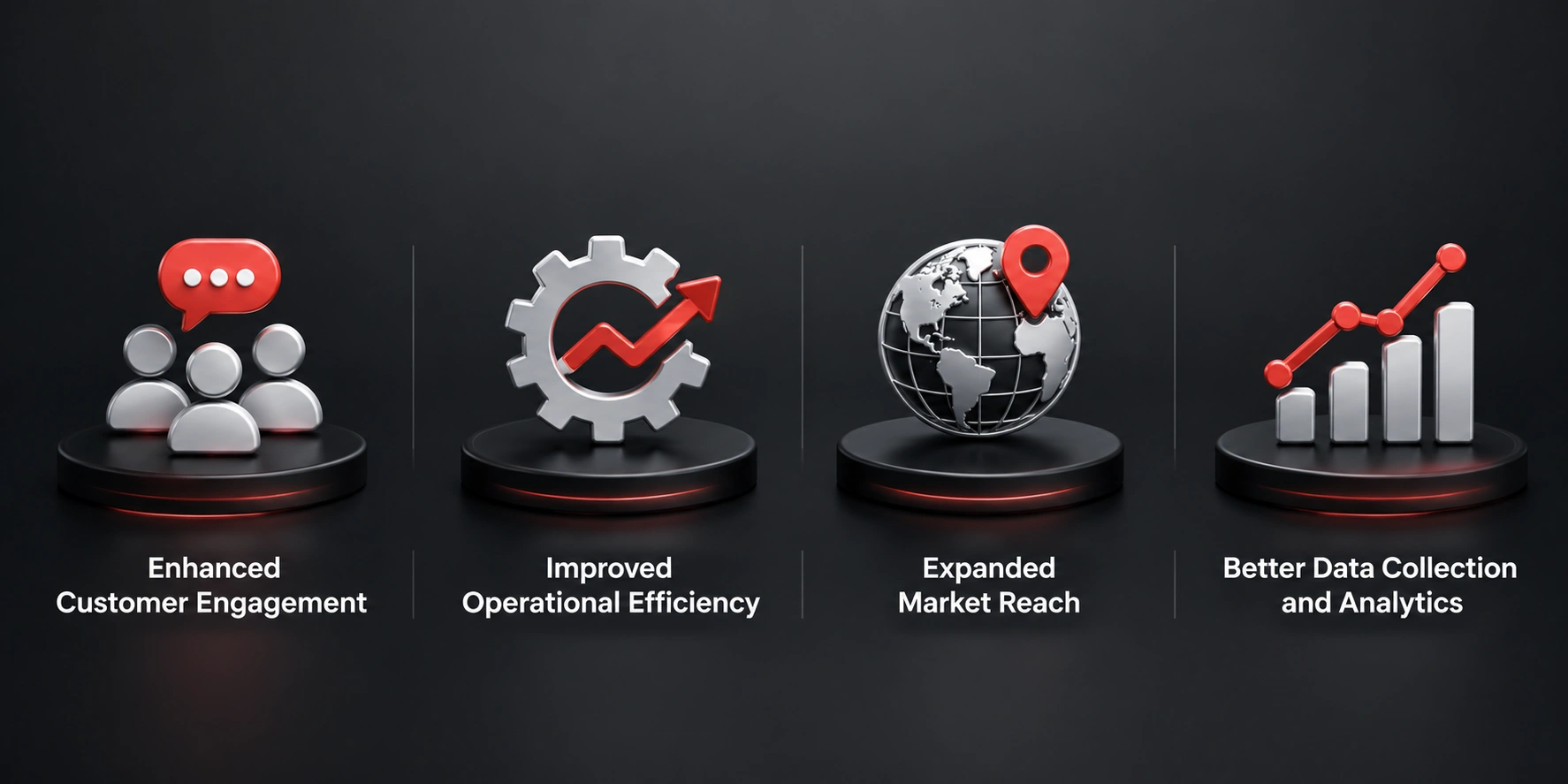
Enhanced Customer Engagement
Customer engagement is one of the most important drivers of business success. Modern customers expect personalized and interactive experiences that provide convenience and immediate value.
Web applications improve customer engagement by offering features such as:
- Personalized dashboards
- Real-time notifications
- Self-service portals
- Instant communication
- Automated support systems
- Interactive product experiences
When customers can interact with businesses seamlessly online, they are more likely to remain loyal and engage repeatedly with products or services.
For example, customer portals allow users to manage subscriptions, access support resources, track purchases, and communicate directly with businesses. These experiences increase customer satisfaction while reducing operational workload for internal teams.
A professionally developed web application enables businesses to create customer-centric ecosystems that improve retention rates and customer lifetime value.
Improved Operational Efficiency
Operational efficiency directly influences profitability and scalability. Many organizations still rely on outdated manual processes that consume excessive time and resources.
Web applications automate repetitive tasks such as:
- Data entry
- Order management
- Appointment scheduling
- Workflow approvals
- Employee onboarding
- Inventory tracking
AI vs Automation in SaaS reduces human error while improving productivity and process consistency.
Businesses that implement custom web solutions often experience faster turnaround times, reduced operational costs, and improved employee performance. By automating administrative functions, teams can focus more on innovation, strategy, and customer experience initiatives.
Organizations seeking long-term scalability frequently invest in enterprise app development to ensure their applications support future operational growth and evolving customer needs.
Expanded Market Reach
Traditional businesses are limited by physical locations and operating hours. Web applications remove these limitations by enabling businesses to reach customers globally at any time.
With a scalable web platform, businesses can:
- Serve customers internationally
- Operate 24/7
- Expand into new markets
- Increase lead generation
- Improve online visibility
This expanded reach creates additional revenue opportunities while strengthening brand awareness.
For startups and growing enterprises, web applications provide a cost-effective way to scale operations without the infrastructure expenses associated with physical expansion.
Better Data Collection and Analytics
Data-driven decision-making has become essential for modern business growth. Web applications collect valuable information about customer behavior, operational performance, and market trends.
Businesses can analyze data such as:
- User engagement patterns
- Conversion rates
- Customer preferences
- Product performance
- Sales metrics
These insights help organizations optimize marketing strategies, improve product offerings, and identify growth opportunities.
Companies that leverage analytics effectively often outperform competitors because they can make strategic decisions based on real customer data rather than assumptions.
Read More: Types Of Web Applications For Businesses: Choosing The Right Model For Scalable Growth
The Role of SaaS Platforms in Business Growth
Software-as-a-Service has revolutionized how businesses deliver digital products and services. SaaS platforms allow users to access software through cloud-based subscriptions instead of traditional installations.
Modern businesses increasingly collaborate with a SaaS product development company to build scalable subscription-based platforms that generate recurring revenue and support global accessibility.
SaaS applications offer several business advantages, including:
- Predictable recurring revenue
- Lower operational costs
- Faster software updates
- Easy scalability
- Cross-device accessibility
SaaS models are particularly attractive because they allow businesses to scale rapidly while maintaining centralized infrastructure management.
Organizations exploring SaaS product development process strategies often discover that SaaS platforms significantly improve customer retention due to continuous service delivery and ongoing feature enhancements.
Industries such as healthcare, fintech, education, logistics, and eCommerce increasingly rely on SaaS applications to streamline operations and improve customer engagement.
Why Scalable Backend Infrastructure Matters
The success of a web application heavily depends on backend performance and architecture. As businesses grow, applications must handle increasing user traffic, transactions, and data processing requirements.
Node.js has become one of the most widely adopted backend technologies due to its speed, scalability, and real-time processing capabilities.
Businesses frequently invest in node Js development services because Node.js enables developers to build highly efficient applications capable of supporting thousands of simultaneous users.
Benefits of Node.js include:
- Fast data processing
- Real-time communication
- Scalable architecture
- Efficient API management
- Reduced server load
Modern businesses often compare node.js vs. other backend technologies to determine which architecture best aligns with their scalability goals and operational requirements.
Node.js is particularly effective for:
- SaaS platforms
- Streaming applications
- Collaboration tools
- Real-time dashboards
- Fintech systems
- Online marketplaces
Its event-driven architecture makes it ideal for businesses that require high performance and seamless user experiences.
Cloud-Based Web Applications and Business Scalability
Cloud computinghas fundamentally transformed web application development by enabling businesses to deploy scalable digital infrastructure without relying on expensive physical servers.
Cloud-powered applications offer flexibility, reliability, and rapid scalability. Businesses can increase resources during periods of high demand and reduce web application development costs during slower periods.
Cloud environments provide advantages such as:
- High availability
- Faster deployment
- Automatic scaling
- Reduced infrastructure costs
- Remote accessibility
- Enhanced security
Modern organizations increasingly adopt cloud migration services to transition legacy infrastructure into scalable cloud environments that support digital growth initiatives.
Cloud-based web applications also improve collaboration by enabling distributed teams to access centralized systems from any location.
Businesses exploring cloud migration strategy frameworks often discover that cloud adoption significantly accelerates innovation while reducing operational complexity.
Why Cloud Managed Services Are Important
The cloud migration & data security checklist is only one step in the digital transformation journey. Businesses must also continuously monitor, optimize, and secure their cloud environments.
This is where cloud managed services become highly valuable.
Managed cloud environments help businesses:
- Monitor infrastructure performance
- Optimize cloud spending
- Improve security management
- Prevent downtime
- Maintain compliance standards
Organizations leveraging benefits of cloud managed services often reduce internal IT burdens while improving application reliability and operational efficiency.
Cloud management providers also help businesses implement disaster recovery strategies, data backups, and cybersecurity protocols that protect sensitive information and ensure business continuity.
As businesses continue scaling digitally, cloud management becomes essential for maintaining performance and stability.
Legacy Systems Can Restrict Business Growth
Many enterprises still rely on outdated software systems developed years or even decades ago. These legacy applications often limit innovation and create operational inefficiencies.
Common challenges associated with legacy systems include:
- Poor scalability
- Security vulnerabilities
- High maintenance costs
- Slow performance
- Limited integrations
- Difficult user experiences
Businesses increasingly invest in legacy application modernization services to transform outdated systems into modern, scalable web applications.
Modernization helps organizations:
- Improve operational efficiency
- Enhance customer experiences
- Enable cloud integration
- Reduce technical debt
- Improve security compliance
Companies exploring a legacy application modernization process often realize that modernization is not simply a technology upgrade; it is a strategic investment in long-term business growth. Modernized applications enable organizations to adapt more quickly to market changes while supporting digital transformation initiatives more effectively
Security Considerations in Modern Web Applications
Cybersecurity has become one of the most critical aspects of web application development. Businesses handling customer data, financial transactions, and operational systems must prioritize security to maintain trust and compliance.
Modern web applications implement security features such as:
- SSL encryption
- Multi-factor authentication
- Secure APIs
- Role-based access controls
- Data encryption
- Threat monitoring systems
Security breaches can severely damage brand reputation while leading to financial and legal consequences. Businesses that invest in secure development practices are better positioned to build customer trust and maintain long-term relationships.
Security is especially important for industries such as healthcare, fintech, eCommerce, and SaaS, where sensitive customer information must remain protected at all times
Industry Applications of Web Application Development
Healthcare
Healthcare organizations use web applications for:
- Telemedicine platforms
- Patient management systems
- Electronic health records
- Appointment scheduling
These applications improve patient accessibility while streamlining administrative workflows.
Finance
Financial institutions leverage web applications for:
- Digital banking
- Online payments
- Fraud detection
- Investment management
Modern fintech platforms depend heavily on secure and scalable web architectures.
Retail and eCommerce
Retail businesses use web applications to manage:
- Online storefronts
- Inventory systems
- Customer loyalty programs
- Payment processing
Digital commerce platforms significantly improve customer convenience and revenue generation.
Education
Educational institutions deploy web applications for:
- Virtual classrooms
- Learning management systems
- Student portals
- Online assessments
Web-based education platforms have become increasingly important in hybrid and remote learning environments.
Logistics and Transportation
Logistics companies use web applications for:
- Shipment tracking
- Fleet management
- Route optimization
- Warehouse operations
These systems improve operational visibility and supply chain efficiency.
Future Trends in Web Application Development
The future of web development will continue evolving rapidly as emerging technologies reshape digital experiences.
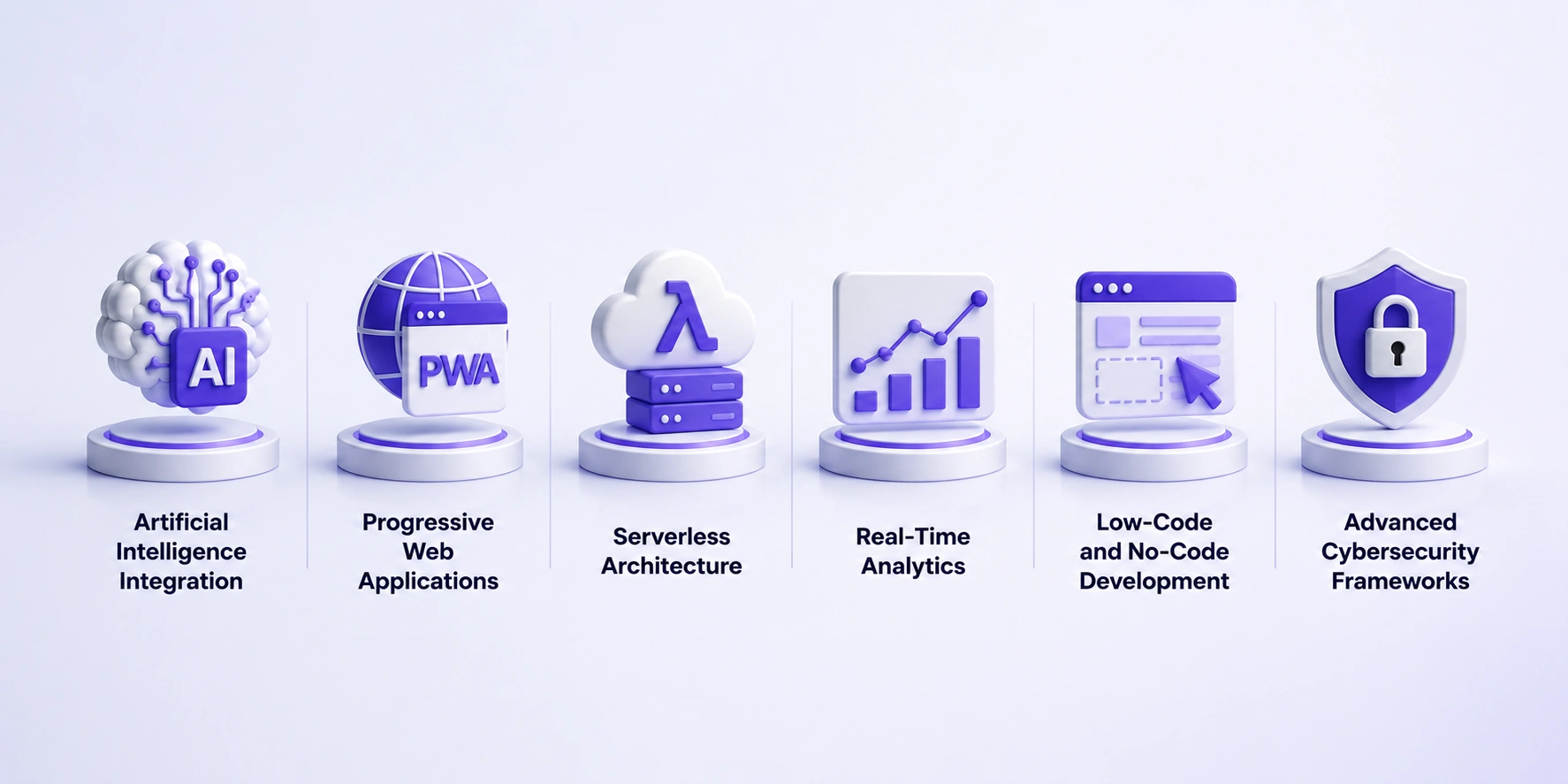
Key trends include:
1) Artificial Intelligence Integration
AI-powered app ideas can automate customer support, personalize user experiences, and improve business analytics. Businesses are increasingly integrating AI into web applications to deliver smarter recommendations, predictive insights, and automated workflows that enhance operational efficiency and customer satisfaction.
2) Progressive Web Applications
PWAs combine the accessibility of websites with the functionality of mobile apps, improving engagement and performance. These applications offer faster loading speeds, offline accessibility, push notifications, and seamless cross-device experiences, making them highly valuable for businesses focused on user retention.
3) Serverless Architecture
Serverless mobile app architecture reduces infrastructure management complexity while improving scalability and cost efficiency. Businesses adopting serverless environments can deploy applications faster while minimizing operational overhead and improving resource utilization.
4) Real-Time Analytics
Businesses increasingly rely on real-time insights to improve operational agility and customer engagement. Real-time analytics help organizations monitor user behavior, track performance metrics, and make faster strategic decisions based on live business data.
5) Low-Code and No-Code Development
These platforms accelerate development processes and enable faster deployment of business applications. Low-code and no-code solutions also allow businesses to prototype and launch digital products quickly while reducing dependency on large development teams.
6) Advanced Cybersecurity Frameworks
As cyber threats evolve, businesses will continue investing heavily in proactive security measures and compliance systems. Modern cybersecurity frameworks help organizations protect sensitive customer data, maintain regulatory compliance, and strengthen overall digital trust.
Organizations that embrace emerging technologies early often gain a competitive advantage through faster innovation and better customer experiences.
Why Businesses Should Partner With an Experienced Development Company
Building a successful web application requires expertise in strategy, design, backend engineering, cloud infrastructure, security, and scalability planning.
Partnering with a professional web design & development company provides businesses with access to experienced teams capable of delivering high-performance digital solutions aligned with business objectives.
An experienced development partner helps organizations:
- Reduce development risks
- Accelerate time-to-market
- Build scalable architectures
- Improve application security
- Optimize user experiences
Businesses also benefit from long-term support, maintenance, and strategic guidance that contribute to sustainable growth.
Organizations evaluating custom web application development cost considerations often discover that investing in professional development services delivers greater long-term value than relying on low-quality or generic solutions.
Conclusion
Web application development has become a critical driver of business growth in the digital economy. Modern web applications empower organizations to improve customer experiences, streamline operations, automate workflows, and scale efficiently across global markets.
From SaaS platforms and cloud-native applications to modernization initiatives and real-time analytics systems, web technologies now influence nearly every aspect of business operations. Companies that invest in scalable, secure, and customer-focused web applications position themselves for long-term success in an increasingly competitive marketplace.
Technologies such as cloud computing, Node.js, SaaS architecture, and legacy modernization continue reshaping how businesses innovate and interact with customers. Organizations that embrace these digital transformation strategies gain stronger operational agility, higher customer retention, and greater revenue opportunities.
As customer expectations continue evolving, businesses that prioritize web application development will remain better equipped to adapt, innovate, and lead in the future digital landscape.
FAQs
1. What is web application development?
Web application development involves creating interactive browser-based applications that help businesses deliver digital services and automate operations.
2. Why is web application development important for business growth?
Web applications improve customer engagement, operational efficiency, scalability, and accessibility, helping businesses grow faster in competitive markets.
3. How do web applications improve customer experience?
Web applications provide personalized dashboards, self-service portals, real-time communication, and seamless accessibility across multiple devices.
4. What industries benefit most from web applications?
Industries like healthcare, finance, retail, education, logistics, and SaaS benefit significantly from scalable web applications.
5. What technologies are commonly used in modern web applications?
Modern web applications often use cloud computing, APIs, Node.js, databases, cybersecurity systems, and front-end frameworks.
6. How does cloud computing support web application scalability?
Cloud computing enables businesses to scale resources dynamically while reducing infrastructure costs and improving application performance.
7. Why is cybersecurity important in web application development?
Strong cybersecurity protects customer data, prevents breaches, ensures compliance, and helps businesses maintain customer trust.
8. What are SaaS web applications?
SaaS applications are cloud-based software platforms users access through subscriptions instead of installing software locally.
9. How do web applications improve operational efficiency?
They automate repetitive processes like scheduling, order management, approvals, inventory tracking, and customer support workflows.
10. What future trends are shaping web application development?
AI integration, PWAs, serverless architecture, low-code platforms, and real-time analytics are shaping future web technologies.
Discuss your project and request for proposal
SHARE
WRITTEN BY

Ishan Gupta
CEO & Founder
Ishan Gupta is a seasoned entrepreneur and CEO with extensive 10+ years of experience in business and mobile app development landscape. He believes that the right digital product allows companies to focus on what they do best, while technology handles the rest. With deep exposure to global markets, he understands what makes an app succeed. His approach translates business needs into clear product strategies, ensuring that every feature contributes to measurable ROI.
View All Articles