


Key Takeaways
- Choosing an experienced iOS development partner significantly improves product quality, scalability, security, and long-term business success.
- Evaluate agencies based on technical expertise, industry experience, client reviews, product discovery, and post-launch support capabilities.
- Native iOS development delivers superior performance, enhanced security, seamless Apple ecosystem integration, and better user experiences.
- The right development partner depends on your business goals, project complexity, budget, and future scalability requirements.
- Comparing multiple iOS development companies helps businesses make informed decisions and maximize long-term return on investment.
The United States remains one of the world’s largest markets for premium mobile applications, with Apple’s ecosystem continuing to generate strong customer engagement, higher average spending, and long-term user loyalty. From healthcare and fintech to retail, logistics, education, and enterprise software, organizations are investing in high-quality iPhone applications to deliver secure, scalable, and intuitive digital experiences.
However, selecting the right development partner can be challenging. Hundreds of agencies claim expertise in Apple’s ecosystem, but they differ significantly in technical capabilities, industry experience, design maturity, development methodology, pricing models, and post-launch support.
Businesses seeking end-to-end native app development can also explore our iOS app development services for custom product engineering. Beyond that, this guide helps you compare some of the top iOS development companies in USA based on expertise, project portfolios, technology capabilities, client satisfaction, and market reputation.
Whether you’re launching a startup MVP, modernizing an enterprise platform, or building an AI-powered consumer application, this comparison will help you identify the development partner that best aligns with your business goals.
Table of Contents
Why Businesses Continue Investing in iOS Apps
Apple continues to dominate the premium smartphone segment across North America, making iOS a strategic platform for organizations targeting high-value customers. Businesses frequently prioritize native iPhone applications because Apple users typically demonstrate stronger purchasing behavior, higher retention rates, and greater engagement with digital products.
Beyond customer demographics, the iOS app development ecosystem provides mature tools that help businesses build secure and scalable applications. Technologies such as Swift, SwiftUI, Core ML, HealthKit, CloudKit, ARKit, and TestFlight enable organizations to create intelligent mobile experiences while maintaining high performance across iPhone, iPad, Apple Watch, and other Apple devices.
Several additional factors continue driving enterprise investment:
- Higher customer lifetime value
- Strong App Store security standards
- Consistent device ecosystem
- Faster operating system adoption
- Better enterprise security capabilities
- Excellent performance for AI-powered mobile experiences
- Seamless integration across Apple’s ecosystem
As digital transformation accelerates, many organizations evaluate multiple iPhone app development firms before selecting a long-term technology partner capable of supporting product evolution beyond the initial launch.
How We Selected the Top iOS Development Companies in USA?
This list is based on publicly available information, verified client reviews, technical expertise, industry recognition, portfolio diversity, and overall market reputation. Rather than focusing solely on team size, we evaluated each organization across several business and technical criteria.
Evaluation Criteria
| Criteria | Considerations |
| Technical Expertise | Swift, SwiftUI, Objective-C, Xcode, Apple ecosystem technologies |
| Client Reviews | Clutch, GoodFirms and other trusted review platforms |
| Portfolio | Diversity across industries and application complexity |
| Industry Experience | Healthcare, fintech, retail, logistics, SaaS, education, travel and enterprise software |
| Design Capabilities | UI/UX maturity and product strategy |
| Development Process | Agile methodology, product discovery, QA and deployment |
| Post-launch Support | Maintenance, optimization and feature enhancements |
| Innovation | AI integration, cloud-native development and emerging Apple technologies |
The companies featured below are listed alphabetically rather than ranked numerically. The best choice ultimately depends on your project scope, technical requirements, budget, and long-term product vision.
Top iOS Development Companies in USA
1. Utility
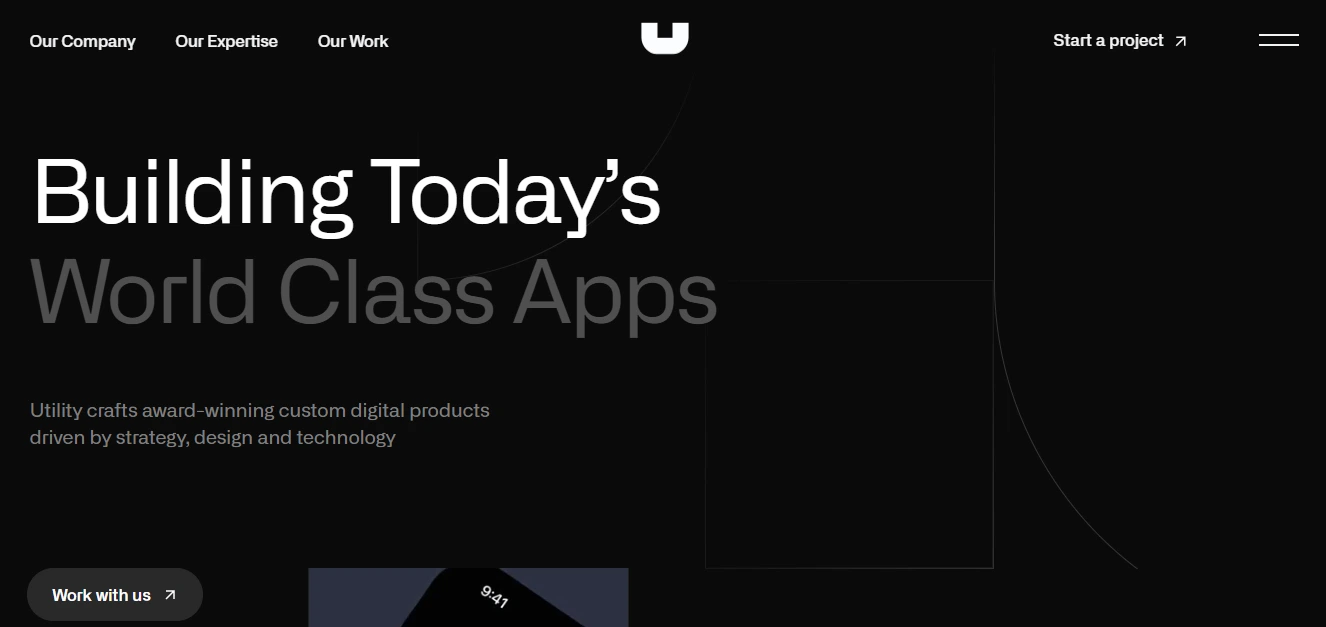
Utility is a digital innovation agency known for building enterprise-grade mobile platforms and consumer applications. The agency collaborates with startups, Fortune 500 organizations, and global brands to deliver high-performance digital products.
Its portfolio includes projects involving mobile engineering, AI solutions, product strategy, and digital transformation.
- Founded: 2013
- Team Size: 100+
- Hourly Rate: $150–$199
- Minimum Project: $50,000+
- Core Services: Native mobile engineering, Product strategy, UX/UI design, AI-powered applications, Enterprise software
Why Choose Them?
Utility is well suited for organizations seeking premium digital transformation initiatives supported by multidisciplinary teams.
Best For
Large enterprises and funded startups.
Pros
- Strong enterprise portfolio
- Excellent design capabilities
- Strategic consulting services
Cons
- Higher project pricing than many competitors.
2. RipenApps
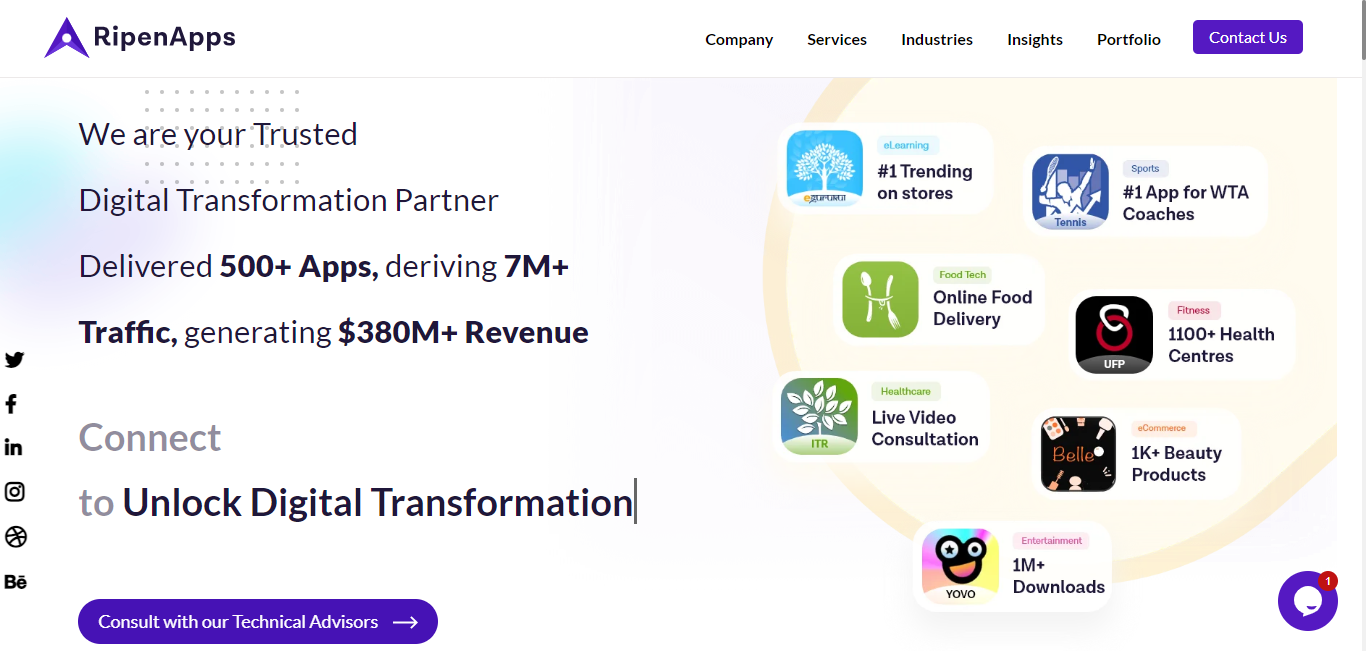
RipenApps is one of the reputed digital product engineering companies specializing in building scalable mobile applications for startups, SMBs, and enterprises. The company has delivered products across healthcare, fintech, logistics, education, retail, social networking, and on-demand services while emphasizing product discovery, user experience, and long-term scalability.
Its development teams combine business consulting, UX research, engineering, QA automation, DevOps, and post-launch optimization to deliver complete product lifecycle support.
- Founded: 2017
- Team Size: 150+
- Hourly Rate: $25–$49
- Minimum Project: $50,000+
- Core Services: Native iOS development, Android development, Cross-platform development, UI/UX design, Product discovery, AI integration
Why Choose Them?
RipenApps focuses on combining product strategy with engineering execution, making it suitable for organizations looking beyond simple application development toward long-term product growth.
Best For
Startups, funded businesses, SMBs, and enterprises seeking end-to-end digital product development.
Pros
- Strong product strategy capabilities
- Full-service engineering team
- Experience across multiple industries
- Modern AI integration expertise
Cons
- Premium engagements may exceed very small startup budgets.
3. Simpalm
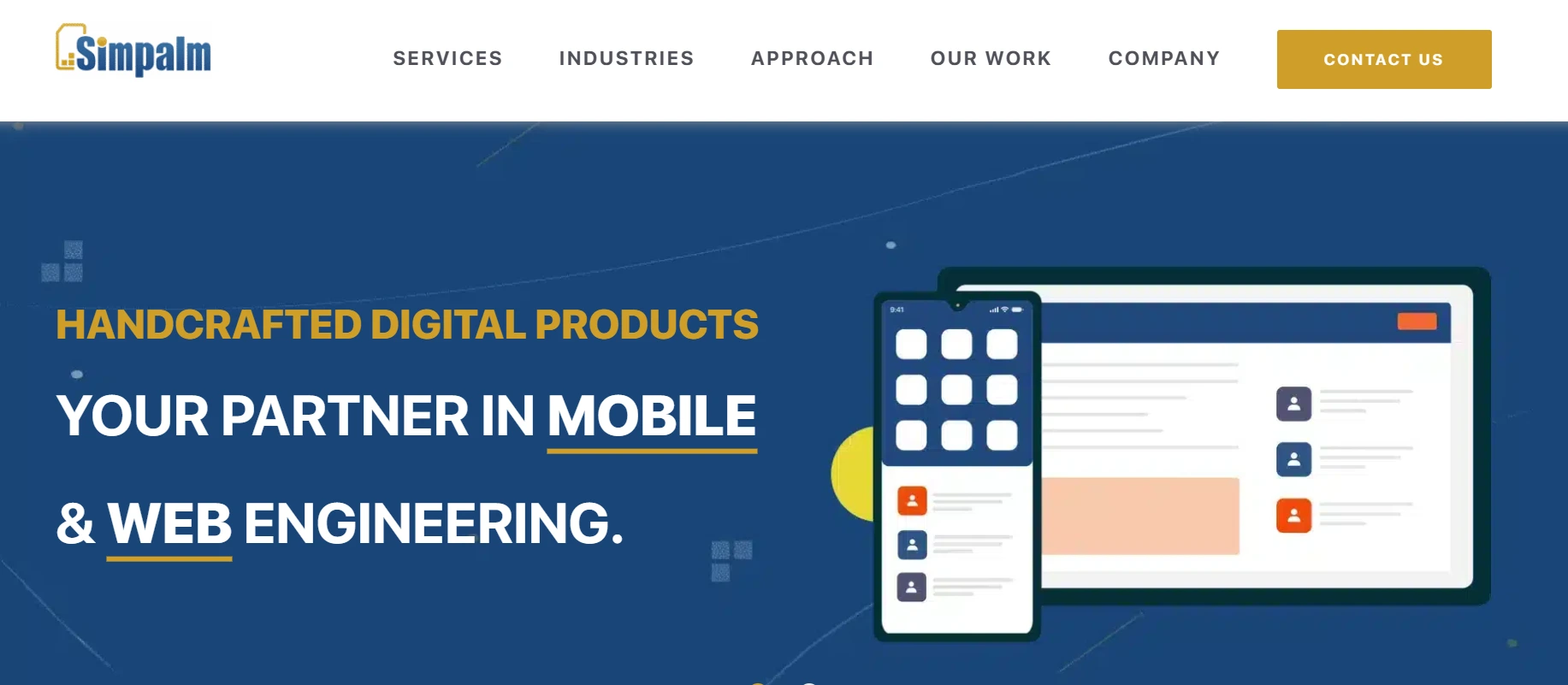
Simpalm is a custom mobile and web app development firm that helps startups, nonprofits, government agencies, and enterprises build scalable digital products. The agency offers end-to-end development services, from product strategy and UI/UX design to development, testing, deployment, and ongoing maintenance. Simpalm has delivered solutions across healthcare, education, finance, real estate, logistics, and eCommerce.
Its cross-functional teams focus on creating user-centric applications using native and cross-platform technologies while integrating cloud infrastructure, AI, and enterprise systems.
- Founded: 2009
- Team Size: 50–249
- Hourly Rate: $25–$49
- Minimum Project: $10,000+
- Core Services: iOS development, Android development, React Native, Flutter, Web application development, UI/UX design, AI integration
Why Choose Them?
Simpalm combines technical expertise with business-focused consulting, making it a strong choice for organizations seeking reliable long-term technology partners.
Best For
Startups, SMBs, nonprofits, government organizations, and enterprises requiring custom digital product development.
Pros
- Strong experience with startups and government projects
- Full-cycle product development services
- Expertise in both mobile and web technologies
- Transparent communication and agile delivery
Cons
- May not be the most cost-effective option for very small businesses with limited budgets
4. Octal IT Solution
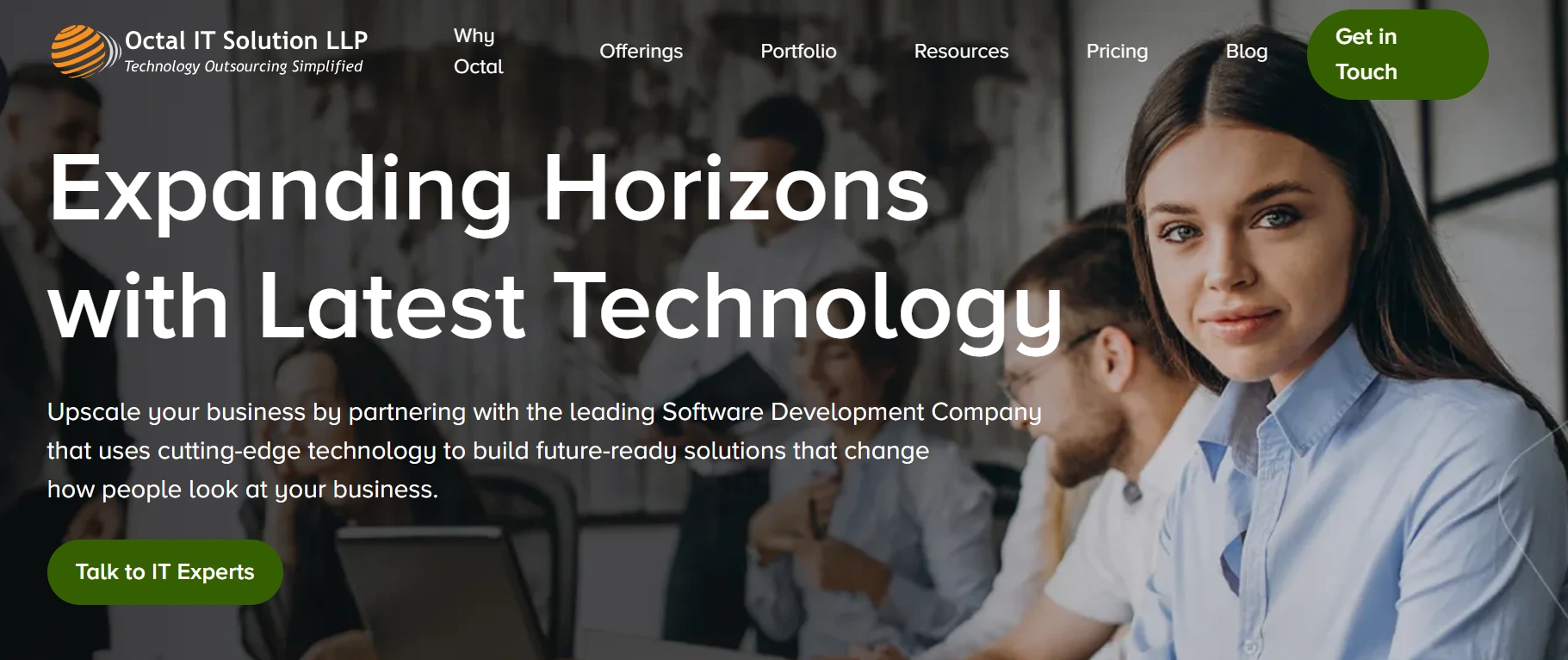
Octal IT Solution is also one of the leading software development firms delivering custom mobile applications, enterprise software, web platforms, and emerging technology solutions. The team serves clients across healthcare, fintech, logistics, travel, education, retail, and manufacturing while focusing on scalable, secure, and business-oriented applications.
Its development teams provide complete product lifecycle support, including consulting, UI/UX design, development, quality assurance, cloud deployment, and post-launch maintenance.
- Founded: 2007
- Team Size: 50–249
- Hourly Rate: $25–$49
- Minimum Project: $10,000+
- Core Services: iOS development, Android development, Cross-platform development, Enterprise software, AI development, Blockchain development, UI/UX design
Why Choose Them
Octal IT Solution combines broad technical expertise with mature development processes, making it suitable for businesses building complex enterprise and customer-facing applications.
Best For
SMBs, enterprises, and startups looking for end-to-end software development with emerging technology capabilities.
Pros
- Extensive enterprise software experience
- Wide range of technology expertise
- Mature development and QA processes
- Strong portfolio across multiple industries
Cons
- Project timelines for highly customized enterprise solutions may be longer than smaller development firms.
5. Saigon Technology
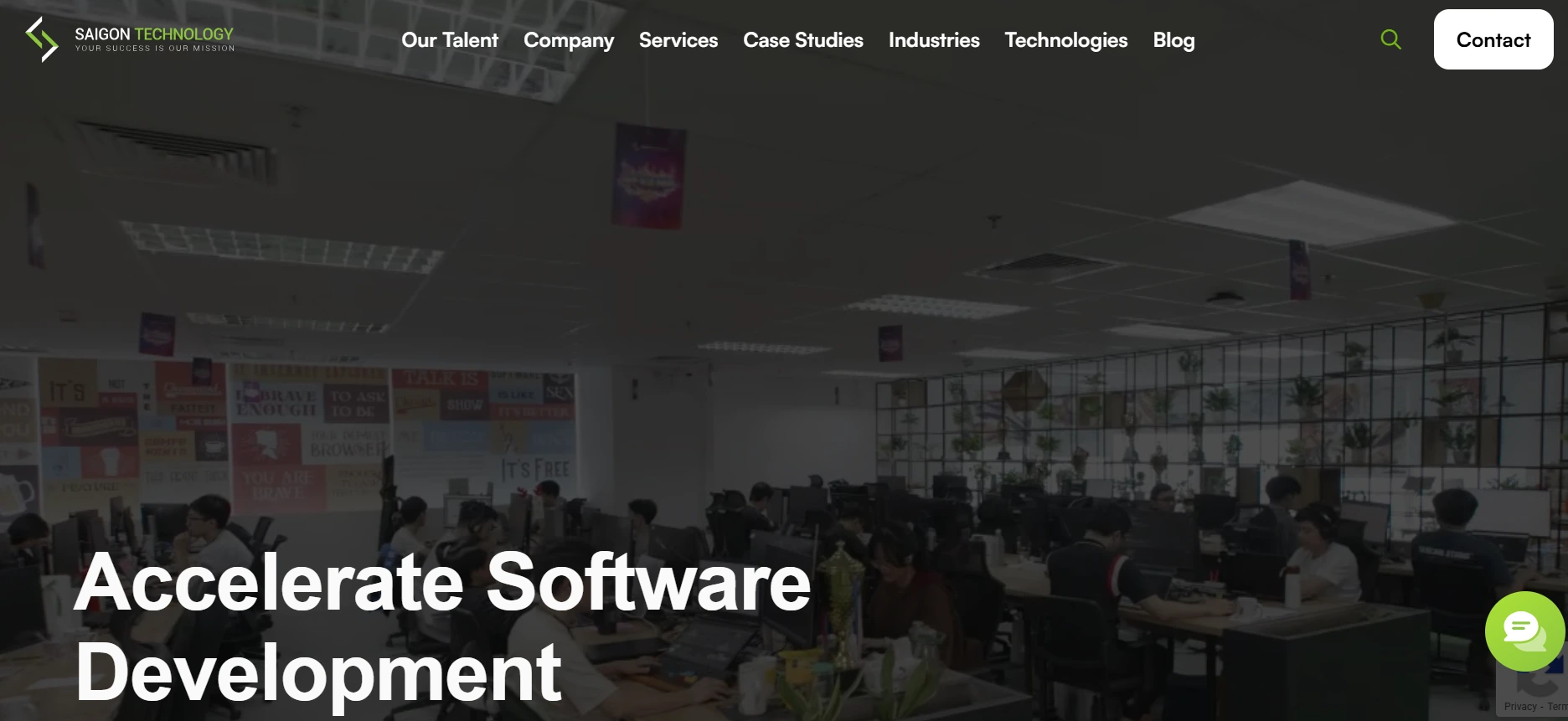
Saigon Technology is a software outsourcing and custom application development partner providing dedicated development teams and end-to-end digital engineering services. The company specializes in enterprise software, cloud-native applications, mobile development, and digital transformation projects for clients worldwide.
Its engineering teams emphasize agile development, DevOps practices, quality assurance automation, and scalable cloud architectures to support long-term business growth.
- Founded: 2012
- Team Size: 350+
- Hourly Rate: $25–$49
- Minimum Project: $10,000+
- Core Services: iOS development, Android development, Custom software development, Cloud development, Dedicated development teams, AI solutions, QA testing
Why Choose Them?
Saigon Technology offers experienced engineering teams and flexible engagement models, making it an ideal partner for businesses expanding their software development capacity.
Best For
Enterprises, ISVs, and growing businesses seeking offshore development teams and digital transformation expertise.
Pros
- Large pool of experienced software engineers
- Strong agile and DevOps practices
- Flexible engagement models
- Extensive enterprise development experience
Cons
- Time zone differences may require coordinated communication for some international clients.
6. Goji Labs
Goji Labs specializes in helping startups and growing businesses transform product ideas into scalable digital platforms. The agency is recognized for its collaborative development process and strong emphasis on product validation before engineering begins.
- Founded: 2014
- Team Size: 50+
- Hourly Rate: $100–$149
- Minimum Project: $25,000+
- Core Services: Native iPhone development, Product strategy, UX research, Web applications, MVP development
Why Choose Them?
Organizations looking for strategic product consulting alongside software engineering often consider Goji Labs for early-stage innovation projects.
Best For
Startups building their first digital products.
Pros
- Strong discovery workshops
- User-centered design approach
- Startup-focused methodology
Cons
- Smaller engineering capacity than large enterprise vendors.
7. Cheesecake Labs
Cheesecake Labs delivers digital products for global brands by combining software engineering, product design, cloud architecture, and emerging technologies. The team has built applications spanning fintech, healthcare, IoT, and enterprise mobility.
- Founded: 2013
- Team Size: 100+
- Hourly Rate: $50–$99
- Minimum Project: $25,000+
- Core Services: Native mobile development, Product engineering, Cloud solutions, UX/UI design, AI integration
Why Choose Them?
Cheesecake Labs is known for building technically sophisticated digital products supported by modern cloud infrastructure and scalable engineering practices.
Best For
Mid-sized businesses and enterprises requiring complex digital platforms.
Pros
- Strong engineering maturity
- Excellent cloud expertise
- Modern architecture capabilities
Cons
- Enterprise-focused engagements may require larger budgets.
8. ArcTouch
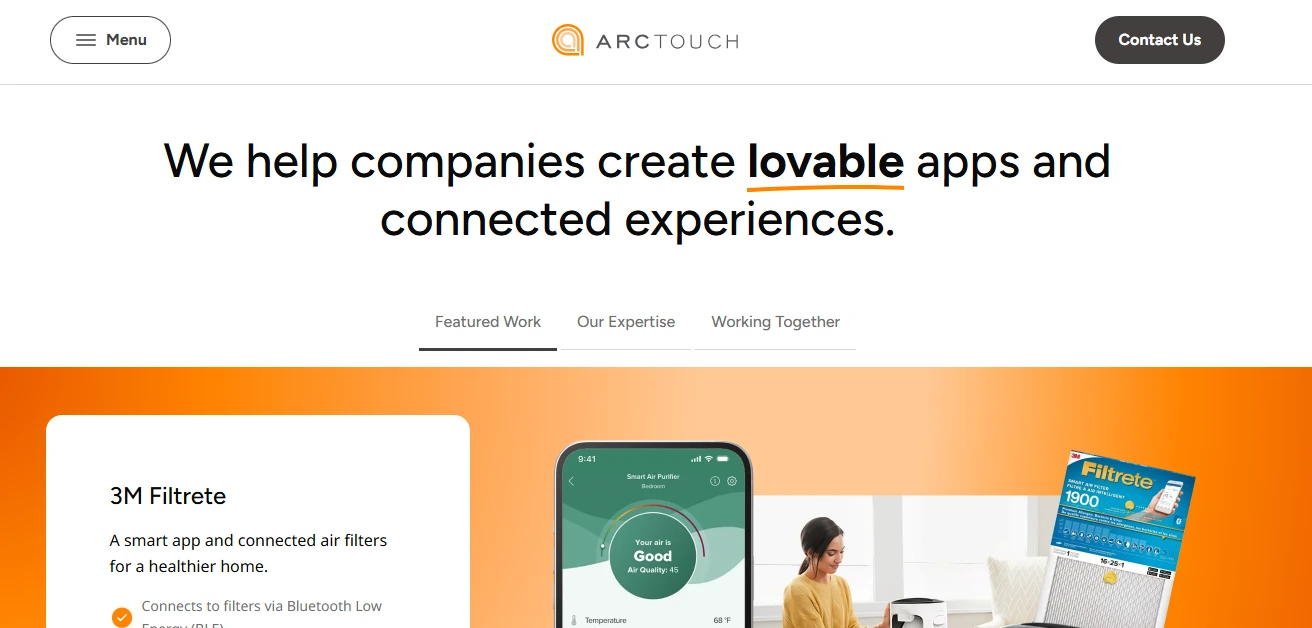
ArcTouch has established itself as one of the leading iOS development firms by delivering mobile experiences for globally recognized brands. Agencies like ArcTouch combines product strategy, engineering, connected device expertise, and emerging technologies to develop enterprise-grade digital products.
- Founded: 2009
- Team Size: 250+
- Hourly Rate: $150–$199
- Minimum Project: $100,000+
- Core Services: Native iPhone applications, Connected devices, Product strategy, AI solutions, UX design
Why Choose Them?
ArcTouch is particularly well suited for organizations seeking sophisticated mobile ecosystems that integrate hardware, connected devices, and intelligent software.
Best For
Large enterprises and global consumer brands.
Pros
- Extensive enterprise experience
- Strong innovation capabilities
- Broad technology expertise
Cons
- Higher minimum project budgets than many boutique agencies.
9. AppMakers USA
AppMakers USA is a boutique digital product studio that helps startups, entrepreneurs, and established businesses transform ideas into intuitive mobile applications. The company emphasizes close client collaboration, product planning, and user-focused experiences throughout the development lifecycle. Its portfolio spans industries including healthcare, education, logistics, and consumer services.
- Founded: 2014
- Team Size: 50+
- Hourly Rate: $100–$149
- Minimum Project: $10,000+
- Core Services: Native iPhone application development, Product strategy, UI/UX design, Web application development, Quality assurance, Product consulting
Why Choose Them?
AppMakers USA is recognized for working closely with founders and small businesses that require personalized attention during product planning and execution.
Best For
Early-stage startups, SMBs, and businesses launching customer-facing mobile products.
Pros
- Strong communication throughout projects
- User-centric design approach
- Flexible engagement options
Cons
- Limited capacity for very large enterprise transformation programs
10. Jafton
Jafton delivers digital products for startups and enterprise organizations by combining engineering expertise with agile development practices. Their experts have experience building scalable mobile applications that support rapid user growth while maintaining performance and reliability.
- Founded: 2013
- Team Size: 120+
- Hourly Rate: $50–$99
- Minimum Project: $25,000+
- Core Services: Native mobile development, Product engineering, Dedicated development teams, Enterprise software, Cloud integration
Why Choose Them?
Jafton offers flexible development models that allow organizations to scale engineering teams according to changing product requirements.
Best For
Growing companies that require dedicated engineering resources.
Pros
- Agile delivery methodology
- Scalable engineering teams
- Experience with fast-growing startups
Cons
- Premium consulting services may increase overall project costs.
11. Naked Development
Naked Development focuses on transforming business ideas into market-ready digital products through strategy, branding, UX design, and engineering. The agency is known for guiding entrepreneurs through product validation before full-scale development begins.
- Founded: 2018
- Team Size: 80+
- Hourly Rate: $100–$149
- Minimum Project: $25,000+
- Core Services: Mobile product strategy, Native application development, Product design, MVP development
Why Choose Them?
Businesses seeking both product strategy and design expertise often consider Naked Development for consumer-focused digital experiences.
Best For
Founders launching innovative mobile-first businesses.
Pros
- Strong branding capabilities
- Excellent product discovery process
- Creative design expertise
Cons
- Smaller enterprise portfolio compared to larger consulting firms.
12. Zco Corporation
Zco Corporation is one of the longest-established software development firms in North America. The firm has delivered mobile, web, enterprise, and custom software solutions for businesses ranging from startups to government organizations. Its decades of engineering experience make it a reliable partner for organizations seeking mature software delivery practices.
- Founded: 1989
- Team Size: 250+
- Hourly Rate: $25–$49
- Minimum Project: $10,000+
- Core Services: Native mobile engineering, Enterprise software, Custom software development, AR and VR solutions, Legacy application modernization
Why Choose Them?
Organizations looking for experienced engineering teams and long-term technical partnerships often shortlist Zco Corporation.
Best For
Mid-sized businesses, enterprises, and government projects.
Pros
- More than three decades of software engineering experience
- Broad technology capabilities
- Strong enterprise delivery processes
Cons
- Traditional development approach may not suit extremely lean startup teams.
13. Mercury Development
Mercury Development specializes in building sophisticated digital products for startups, Fortune 500 companies, and technology-driven organizations. Their team have the expertise to deliver numerous mobile applications across healthcare, financial services, transportation, and connected devices while maintaining a strong focus on software quality and long-term scalability.
- Founded: 1999
- Team Size: 450+
- Hourly Rate: $50–$99
- Minimum Project: $25,000+
- Core Services: Native application engineering, Enterprise mobility, Cloud development, IoT solutions, Product maintenance
Why Choose Them?
Mercury Development combines enterprise engineering expertise with mature quality assurance practices, making it suitable for complex business applications.
Best For
Organizations developing mission-critical digital platforms.
Pros
- Extensive enterprise experience
- Mature QA and testing processes
- Large engineering workforce
Cons
- Large-scale engagements may involve longer project planning phases.
14. USM Business Systems
USM Business Systems delivers technology consulting and software development solutions to businesses across healthcare, banking, insurance, retail, manufacturing, and public sector industries, helping them modernize business operations through enterprise mobility, AI, cloud, automation, and digital transformation.
Its multidisciplinary teams provide consulting, software engineering, cloud migration, quality assurance, data engineering, and managed IT services throughout the product lifecycle.
- Founded: 1999
- Team Size: 250+
- Hourly Rate: $25–$49
- Minimum Project: $25,000+
- Core Services: Mobile app development, Enterprise software development, AI & Machine Learning, Cloud services, Data engineering, QA testing, IT consulting
Why Choose Them?
USM Business Systems combines enterprise consulting expertise with modern software engineering capabilities, making it suitable for organizations pursuing large-scale digital transformation initiatives.
Best For
Mid-sized businesses, enterprises, and government organizations requiring enterprise-grade technology solutions.
Pros
- Strong enterprise consulting background
- Expertise in AI, cloud, and data engineering
- Comprehensive digital transformation services
- Experience across regulated industries
Cons
- Enterprise-focused engagements may not be ideal for early-stage startups with limited budgets.
15. BlueLabel
BlueLabel is a digital product agency that partners with startups, mid-sized businesses, and Fortune 500 companies to build innovative mobile solutions. The company combines business strategy, user experience design, engineering, and product consulting to deliver applications that support long-term digital growth. Its collaborative development process has helped organizations launch scalable products across healthcare, finance, retail, and media.
- Founded: 2009
- Team Size: 100+
- Hourly Rate: $100–$149
- Minimum Project: $75,000+
- Core Services: Native iPhone application development, Product strategy, UX/UI design, AI-powered product development, Enterprise software solutions, Digital transformation consulting
Why Choose Them?
BlueLabel combines business consulting with software engineering, making it an attractive option for organizations looking to validate product ideas before investing in large-scale development.
Best For
Mid-sized businesses, funded startups, and enterprise innovation teams.
Pros
- Strong product strategy expertise
- Experience with enterprise digital products
- Mature Agile development process
Cons
- Premium pricing for large engagements
16. Surf
Surf is one of the leading software development companies specializing in digital products for businesses undergoing digital transformation. The team has delivered mobile solutions for retail, fintech, healthcare, and logistics organizations by combining user-centered design with modern engineering practices.
- Founded: 2011
- Team Size: 150+
- Hourly Rate: $50–$99
- Minimum Project: $25,000+
- Core Services: Native Apple application development, Product engineering, UX/UI design, Cloud integration, Quality assurance, Application modernization
Why Choose Them?
Surf is recognized for balancing technical expertise with user-focused design, helping businesses launch applications that scale efficiently.
Best For
Companies modernizing existing digital products or expanding into Apple’s ecosystem.
Pros
- Balanced engineering and design capabilities
- Strong product modernization experience
- Flexible collaboration models
Cons
- Smaller brand recognition compared to some enterprise consulting firms.
17. Telus Digital
Telus Digital is one of the most established digital product consultancies in North America, delivering enterprise-grade mobile experiences for global brands. Firms like this specializes in strategy, product design, engineering, cloud infrastructure, and connected digital ecosystems.
Its portfolio spans healthcare, retail, financial services, hospitality, telecommunications, and media, making it a preferred technology partner for organizations with complex digital initiatives.
- Founded: 2008
- Team Size: 1,000+
- Hourly Rate: $150–$199
- Minimum Project: $100,000+
- Core Services: Native mobile engineering, Digital product strategy, Experience design, Enterprise mobility, Cloud engineering, AI integration
Why Choose Them?
WillowTree combines enterprise consulting with advanced engineering expertise, making it suitable for organizations managing large-scale digital transformation programs.
Best For
Fortune 500 companies and large enterprises.
Pros
- Extensive enterprise portfolio
- Large multidisciplinary teams
- Strong cloud engineering expertise
- Proven delivery methodologies
Cons
- High project budgets may not suit startups or smaller businesses.
How to Choose the Right iOS Development Partner
Selecting from the top iOS development companies in USA requires more than comparing pricing or company size. The right development partner should understand your business goals, recommend the most suitable technology stack, follow a transparent development process, and continue supporting your application after launch. Evaluating agencies against the following criteria will help you make a well-informed decision.
1. Evaluate Their Industry Experience
Industry expertise can significantly influence the success of your project. Agencies that have previously developed applications for your sector already understand common user expectations, business workflows, compliance requirements, and technical challenges. For example, organizations planning healthcare app development should look for partners with experience in data privacy regulations, HIPAA compliance, and HealthKit integrations, while fintech products demand secure authentication, payment processing capabilities, and adherence to financial security standards.
Review the company’s portfolio, case studies, and client testimonials to determine whether they have successfully delivered projects similar to yours. Real-world experience often translates into faster development, fewer risks, and better business outcomes.
2. Assess Their Technical Expertise
A reliable development partner should demonstrate expertise across Apple’s latest technologies rather than relying on outdated development practices. Modern applications require proficiency in Swift, SwiftUI, Xcode, Core ML, CloudKit, ARKit, TestFlight, and secure cloud platforms to deliver high-performance digital experiences.
During initial discussions, ask the agency to explain why they recommend a particular technology stack for your project. Their recommendations should be based on scalability, security, maintainability, and future product growth rather than simply following current technology trends.
3. Understand Their Product Discovery Process
Successful applications begin long before development starts. Leading iOS development agencies invest time in understanding business objectives, validating product ideas, researching competitors, and identifying user expectations before writing code.
An effective product discovery process generally includes stakeholder workshops, user research, wireframing, interactive prototyping, technical feasibility analysis, and roadmap planning. This structured approach reduces development risks, improves budget predictability, and minimizes costly changes later in the project.
4. Review Their Design Capabilities
An application’s interface directly impacts user engagement, retention, and overall customer satisfaction. Beyond creating visually appealing screens, agencies should follow Apple’s Human Interface Guidelines and focus on usability, accessibility, intuitive navigation, and consistent design systems.
Review live applications from their portfolio whenever possible. Pay attention to navigation flows, visual consistency, responsiveness, and overall user experience instead of evaluating design aesthetics alone.
5. Examine Their Development Methodology
Development methodology plays an important role in project transparency and delivery quality. Agencies following Agile practices typically provide better communication, shorter feedback cycles, and greater flexibility throughout development.
Ask how they manage sprint planning, project tracking, testing, code reviews, quality assurance in mobile app development, and stakeholder communication. A well-defined process helps ensure predictable delivery while allowing room for evolving business requirements.
6. Evaluate Post-Launch Support
Launching an application is only one milestone in its lifecycle. Ongoing updates are necessary to maintain compatibility with new iOS releases, improve security, fix bugs, optimize performance, and introduce new features based on user feedback.
Before selecting an agency, understand what post-launch services are included, how support requests are managed, and whether long-term maintenance packages are available. A dependable support strategy ensures your application continues delivering value as your business grows.
Common Mistakes Businesses Should Avoid
Choosing the wrong development partner can lead to increased costs, delayed timelines, and disappointing user experiences. Being aware of the following mistakes can help you make a more informed decision.
1. Selecting an Agency Based Only on Price
Choosing the lowest-cost proposal may seem financially attractive, but it often results in technical debt, inconsistent quality, or additional redevelopment expenses. Instead of focusing solely on hourly rates, evaluate the overall value an agency brings through technical expertise, communication, and long-term support.
2. Skipping the Product Discovery Phase
Some businesses rush directly into development without validating requirements or defining a clear product roadmap. This frequently leads to scope changes, delayed releases, and budget overruns. Investing in product discovery creates a stronger foundation for successful development.
3. Ignoring Scalability
Your application should support future business growth. Agencies should design software architecture that accommodates increasing users, additional features, third-party integrations, and evolving business requirements. Failing to plan for scalability often results in expensive redevelopment later.
4. Evaluating Only the Portfolio
An impressive portfolio does not always reflect engineering quality. Review client testimonials, independent ratings, development processes, security practices, and post-launch support capabilities before making your final decision. This provides a more complete picture of an agency’s overall performance.
5. Overlooking Post-Launch Support
Application development continues long after deployment. Regular updates, security patches, compatibility improvements, analytics monitoring, and mobile app performance optimization are essential for maintaining a successful product. Ensure your chosen agency offers reliable long-term maintenance services rather than ending the engagement after launch.
Why Choose RipenApps?
Choosing an iOS partner comes down to one question: can they build something that holds up at scale on Apple’s platform? Shipping to the App Store is the easy part. Keeping an app stable through annual iOS releases, maintaining performance as the user base grows, and clearing App Review without repeated rejections is where most engagements come apart. RipenApps builds native iOS applications in Swift and SwiftUI alongside cross-platform products, with App Store Review Guidelines and OWASP security principles built into the delivery process rather than bolted on before submission. Our iOS portfolio spans fintech, healthcare, eCommerce and entertainment, and we support products after launch through OS transitions, not just to the point of approval.
That approach is visible in Hungama, the entertainment streaming platform we engineered as a unified digital ecosystem integrating a 30M+ song catalogue and 8,000+ movies and web shows behind an AI-driven recommendation layer. The app holds a 4.0★ rating on the Apple App Store across 11,474 ratings, has passed 50M+ installs on Google Play with 553K reviews, and was delivered in seven months. It remains actively maintained, with its most recent update in August 2026, a reasonable measure of whether a build is engineered to last.
Which Type of iOS Development Partner Is Right for Your Business?
Every business has unique goals, budgets, and technical requirements, so there is no one-size-fits-all development partner. Understanding what different types of agencies specialize in can help you narrow your options and choose a team that aligns with your product vision.
1. Startups Looking to Build an MVP
If you’re a startup building your first product, prioritize agencies that specialize in product discovery, MVP development, and rapid iteration. These firms can help validate your idea, define core features, and launch a market-ready application without unnecessary development costs.
Agencies that guide you on whether a prototype or an MVP is the right first step often help reduce unnecessary development time and costs. Look for teams that offer strategic consulting alongside engineering, as they can provide valuable guidance during the early stages of product development.
2. Small and Medium-Sized Businesses
Growing businesses typically need a partner that balances quality with cost efficiency. Agencies serving this segment should be capable of building scalable applications while offering flexible engagement models and ongoing technical support. Their experience in expanding existing products, integrating third-party services, and improving operational efficiency can provide long-term value.
3. Large Enterprises
Enterprise organizations often require development partners with multidisciplinary teams, mature project management practices, and expertise in cloud infrastructure, security, compliance, and digital transformation. These agencies are better equipped to handle complex workflows, legacy system integrations, and large-scale application ecosystems while ensuring governance and business continuity.
4. Businesses in Regulated Industries
Organizations operating in industries such as healthcare, finance, insurance, and government should prioritize agencies with experience handling compliance requirements and sensitive data. A partner familiar with industry regulations can implement robust security practices, maintain regulatory standards, and reduce potential legal or operational risks throughout the development lifecycle.
Why Businesses Choose Native iOS Development?
Although cross-platform frameworks have become increasingly popular, many organizations continue investing in native iPhone applications because of the advantages they offer within Apple’s ecosystem.
1. Superior Performance
Applications built specifically for iOS take full advantage of Apple’s hardware and software integration. Native development delivers faster performance, smoother animations, improved responsiveness, and better resource management, resulting in a more seamless user experience.
2. Enhanced Security
Apple’s ecosystem is known for its strong security standards. Native development enables businesses to implement advanced authentication methods, secure data storage, biometric verification, and platform-specific security features that protect both user information and business data.
3. Better User Experience
Native applications follow Apple’s Human Interface Guidelines, ensuring consistency across navigation, gestures, accessibility, and interface design. Familiar user experiences encourage engagement, improve retention, and contribute to higher customer satisfaction.
For businesses still evaluating native vs cross-platform app development, understanding the trade-offs between the two approaches can help determine which option best aligns with their performance, scalability, and user experience goals.
4. Faster Access to New Apple Features
Apple introduces new APIs and platform capabilities every year. Native development allows businesses to adopt innovations such as Apple Intelligence, Core ML enhancements, ARKit improvements, widgets, Live Activities, and other iOS features immediately after release, giving them a competitive advantage.
5. Long-Term Scalability
Native applications are easier to optimize for performance and future updates as business requirements evolve. Whether you’re expanding to additional Apple devices or introducing advanced features, native architecture provides greater flexibility for long-term growth.
Final Thoughts
Finding the right development partner requires careful evaluation rather than choosing the first agency that appears in search results. The companies featured in this guide represent a diverse range of expertise, from boutique product studios supporting startups to enterprise consultancies delivering complex digital transformation projects.
Instead of focusing on rankings alone, compare each agency based on its industry experience, technical capabilities, design expertise, development methodology, pricing transparency, client reviews, and long-term support services. Taking a structured approach to evaluation will help you identify a partner capable of building a secure, scalable, and high-performing application that aligns with your business goals.
As Apple’s ecosystem continues to evolve with advancements in artificial intelligence, augmented reality, wearable technology, and connected experiences, partnering with an experienced development team can position your business to take full advantage of future opportunities. Whether you’re launching a new digital product or modernizing an existing application, choosing the right partner is an investment in your product’s long-term success.
FAQs
Q1. How do I choose the best iOS development partner for my project?
Start by evaluating each agency’s industry experience, technical expertise, portfolio, client reviews, communication process, and post-launch support. Rather than selecting a development partner based only on pricing, consider whether it understands your business goals and has successfully delivered projects similar to yours.
Q2. How much does it cost to build an iPhone application?
The iOS app development cost depends on several factors, including the application’s complexity, design requirements, third-party integrations, security features, testing requirements, and ongoing maintenance. A simple MVP typically requires a smaller investment than an enterprise-grade application with advanced functionality and integrations.
Q3. How long does iPhone application development usually take?
Development timelines vary depending on project scope and complexity. A basic MVP may take three to five months, while feature-rich enterprise applications can require six to twelve months or longer. The product discovery phase, design revisions, and integration requirements also influence the overall timeline.
Q4. What technologies are commonly used for native iOS development?
Most leading agencies use technologies such as Swift, SwiftUI, Objective-C for legacy applications, Xcode, Core ML, CloudKit, ARKit, HealthKit, TestFlight, REST APIs, GraphQL, and cloud platforms like AWS or Microsoft Azure to build secure and scalable applications.
Q5. Should I choose a boutique agency or a large enterprise consultancy?
The right choice depends on your business requirements. Startups often benefit from boutique agencies that provide personalized attention, product discovery, and rapid development. Larger organizations with complex digital ecosystems may prefer enterprise consultancies that offer multidisciplinary teams, governance, and extensive technical resources.
Q6. Do these agencies provide application maintenance after launch?
Most established development firms offer post-launch services such as performance monitoring, bug fixes, feature enhancements, security updates, operating system compatibility improvements, and ongoing technical support. It’s important to discuss maintenance options before beginning the project.
Q7. Why do businesses continue investing in native iOS applications?
Native applications provide superior performance, enhanced security, seamless integration with Apple’s ecosystem, and immediate access to new platform capabilities. They also deliver a user experience that aligns with Apple’s design standards, helping businesses improve customer satisfaction and long-term engagement.
Q8. Can an existing iPhone application be modernized instead of rebuilt?
Yes. In many cases, modernizing an existing application is more cost-effective than developing a completely new one. Modernization may involve updating the user interface, improving performance, migrating to Swift, integrating modern APIs, strengthening security, and optimizing compatibility with the latest iOS versions.
Discuss your project and request for proposal
SHARE
WRITTEN BY

Prankur Haldiya
Chief Technical Officer
A tech innovator and engineering leader, Prankur Haldiya drives RipenApps’ product development strategy and oversees cutting-edge solutions in mobility, AI, and cloud ecosystems. He is passionate about building high-performance teams and helping brands launch secure, scalable, and user-centric digital products.
View All Articles